The post Top Enterprise Software Testing Companies in India appeared first on KiwiQA.
]]>According to industry reports, software bugs cost businesses over $2.4 trillion annually, while 50% of users uninstall apps due to poor performance or crashes. Additionally, security breaches caused by application vulnerabilities have risen by more than 30% year-over-year, highlighting the critical need for thorough testing.
What is Software Testing?
The process of assessing a software program involves identifying flaws, mistakes, or security concerns prior to the product’s distribution. Testing guarantees that the system operates well in a variety of settings and circumstances, improves software quality, and improves user experience.
Why Enterprises Need Professional Software Testing Services?
❏ Ensures high software quality and performance
 An expert enterprise software testing agency assists in the early detection of flaws, guaranteeing that the program functions properly and provides consumers with accurate results.
❏ Reduces business risks and costly failures
Extensive testing reduces operational disruptions, system breakdowns, and monetary losses caused by software faults.
❏ Improves security and compliance
Enterprise software testing consultancy finds flaws and makes sure apps adhere to industry security guidelines and legal requirements.
❏ Accelerates product releases with automation
Automation enterprise software testing services company helps businesses release software updates more quickly by expediting repetitive operations.
❏ Enhances user experience and system reliability
Applications that have undergone extensive testing offer improved usability, stability, and dependable performance in a variety of settings and platforms.
Software Testing Services Offered by Enterprise Testing Companies
❏ Functional Testing
Validating whether each element of an application operates in accordance with the specified criteria is the main goal of functional testing. To guarantee seamless operation throughout the entire program, enterprise testing firms closely inspect processes, user interactions, and system replies. Businesses can find functional gaps early in the development cycle with the help of a reputable software testing consultancy firm.
❏ Automation Testing
Automation software testing companies in India use advanced scripts for running repetitive test cases instantly, which ultimately boosts the testing speed. Enterprise testing firms create automated frameworks that greatly increase testing speed and minimize manual labor. By lowering human error and guaranteeing consistent outcomes throughout several testing cycles, automation testing also increases accuracy.
❏ Performance Testing
Performance testing assesses an application’s behavior under various traffic and workload scenarios. To gauge system responsiveness, stability, and speed, enterprise testing firms mimic actual user behavior. This testing supports locating memory leaks, server constraints, bottlenecks, and other performance problems that could impair user experience. Businesses may optimize their infrastructure and guarantee seamless operation even during heavy demand by examining system behavior during peak usage.
❏ Security Testing
In order to safeguard company applications against cyber attacks and vulnerabilities, security testing is essential. Enterprise testing firms carry out thorough security evaluations to find flaws in system setups, data processing, authentication, and APIs. Security testing guarantees that all data is kept safe from unnecessary access. Additionally, it assists businesses in adhering to security guidelines and requirements. Businesses can increase user trust and protect their digital assets by strengthening the application’s security infrastructure.
❏ Mobile and Web Application Testing
Testing mobile and web applications ensures they run smoothly across a variety of hardware, operating systems, and browsers. To provide a uniform user experience, enterprise testing firms assess usability, responsiveness, functionality, and compatibility. Testers examine how the program functions across a range of screen sizes, device combinations, and network conditions. This procedure facilitates discovering performance, navigation, or layout problems that might affect user pleasure.
Also Read: Top Software Testing Trends Every Business Must Prepare for in 2026
Key Factors to Consider When Choosing a Software Testing Company
❏ Industry experience and expertise
Select the best software testing companies in India that have a track record of success in managing a variety of testing tasks. Teams with more experience are better equipped to comprehend problems, which guarantees reliable testing methods and higher-quality software.
❏ Testing tools and technologies used
Make sure the business takes advantage of cutting-edge technology, automation frameworks, and modern testing equipment. Testing effectiveness, precision, and overall application performance are all enhanced by updated tools.
❏ Skilled QA engineers and testing teams
Comprehensive testing procedures are guaranteed by a solid group of professional QA engineers. Professionals with the necessary skills can maintain high testing standards and find faults fast.
❏ Client reviews and case studies
Testimonials from clients, evaluations, and case studies are useful tools for assessing a company’s performance, reputation, and capacity to produce positive testing outcomes.
❏ Cost-effectiveness and scalability
Select a top software testing company in India that can match project requirements with scalable testing teams and various pricing models without raising operating expenses.
Top Enterprise Software Testing Companies in India
1. KiwiQA
KiwiQA provides end-to-end QA and testing services to businesses across the globe. KiwiQA helps companies produce reliable, high-quality applications while lowering development risks. They are responsible for managing overall software performance with the assistance of skilled QA specialists and cutting-edge tools.
| Key Points | Services Provided |
|---|---|
| Founded Year: 2009 | Software Testing |
| Number of Employees: 51-200 | Mobile Testing |
| Location: India | Manual Testing |
| LinkedIn: View Profile | Automation Testing |
| Website: KiwiQA | Performance Testing |
2. eSparkBiz
eSparkBiz offers businesses in a variety of industries complete software testing and quality assurance services. Functional testing, mobile app testing, and automation testing are their team’s areas of expertise. eSparkBiz assists companies in ensuring product stability, quicker releases, and a consistent user experience across platforms. The company advanced testing frameworks and agile processes.
| Key Points | Services Provided |
|---|---|
| Founded Year: 2010 | Software Testing |
| Number of Employees: 201-500 | Agile software development |
| Location: India | AI/ML Development |
| LinkedIn: View Profile | Data Science |
3. Vrinsoft Technology Pvt. Ltd.

Vrinsoft Technology Pvt. Ltd. provides reliable business software testing services intended to improve the usability and performance of applications. Their QA specialists concentrate on security, automation, and functional testing. With years of experience in the field, Vrinsoft helps companies provide reliable digital solutions that satisfy performance, quality, and reliability requirements.
| Key Points | Services Provided |
|---|---|
| Founded Year: 2009 | Software Testing |
| Number of Employees: 51-200 | Mobile App Development |
| Location: India | Blockchain Development |
| LinkedIn: View Profile | Web Design |
4. Dawn IT Services and Solutions LLP

For businesses seeking to enhance application quality, Dawn IT Services and Solutions LLP offers specialized software testing services. The company assists companies in lowering development costs and launching reliable, high-performing software products by spotting problems early.
| Key Points | Services Provided |
|---|---|
| Founded Year: 2012 | Software Testing |
| Number of Employees: 51-200 | Data Analytics |
| Location: India | Web Development |
| LinkedIn: View Profile | SEO Services |
5. ANGLER Technologies
A prominent supplier of IT solutions, ANGLER Technologies provides quality assurance and enterprise software testing services. Enhancing software performance, functionality, and stability is the main goal of their testing team. ANGLER Technologies assists companies in delivering secure and scalable apps across online and mobile platforms by utilizing cutting-edge testing tools and techniques.
| Key Points | Services Provided |
|---|---|
| Founded Year: 2001 | Software Testing |
| Number of Employees: 51-200 | Mobile Application Development |
| Location: India | Ecommerce |
| LinkedIn: View Profile | DevOps Service |
6. Talent Smart
Talent Smart offers business software testing and IT consulting services to companies that want to produce outstanding digital products. Talent Smart helps companies find flaws early and increase overall software reliability with a strong emphasis on efficiency and accuracy.
| Key Points | Services Provided |
|---|---|
| Founded Year: 2018 | Software Testing |
| Number of Employees: 501-1000 | Application Development |
| Location: India | Cloud Computing |
| LinkedIn: View Profile | Salesforce Services |
7. Vofox Solutions
Vofox Solutions provides enterprise-level software testing services aimed at enhancing the stability and performance of applications. Their group offers testing solutions, including security, automation, and manual testing. Vofox Solutions helps companies offer dependable apps and improve customer satisfaction by emphasizing quality and creativity.
| Key Points | Services Provided |
|---|---|
| Founded Year: 2005 | Software Testing |
| Number of Employees: 51-200 | Cyber Security |
| Location: India | UI/UX Design |
| LinkedIn: View Profile | React JS Development |
8. Lucid Outsourcing Solutions Pvt. Ltd.
Lucid Outsourcing Solutions Pvt. Ltd. provides businesses all over the world with specialized software testing and quality assurance services. Lucid assists companies in lowering software faults and maintaining consistent application performance.
| Key Points | Services Provided |
|---|---|
| Founded Year: 2012 | Software Testing |
| Number of Employees: 51-200 | WordPress Development |
| Location: India | Web Design Development |
| LinkedIn: View Profile | Mobile App Development |
9. SparxIT
SparxIT is a multinational technology business that provides quality assurance and enterprise software testing services. Their QA team uses extensive testing techniques, such as functional, usability, and automated testing, to provide reliable applications. SparxIT assists companies in improving software quality, guaranteeing reliability, and offering superior digital experiences.
| Key Points | Services Provided |
|---|---|
| Founded Year: 2007 | Software Testing |
| Number of Employees: 201-500 | Website Development |
| Location: India | AI Development |
| LinkedIn: View Profile | Performance Testing |
10. Genesis Technologies
Enterprise software testing solutions from Genesis Technologies are intended to enhance the dependability and performance of applications. Genesis Technologies assists companies in producing safe, scalable, and superior digital products by making sure software satisfies industry standards.
| Key Points | Services Provided |
|---|---|
| Founded Year: 2011 | Software Testing |
| Number of Employees: 51-200 | Agile Development |
| Location: India | Software Development |
| LinkedIn: View Profile | Integration Services |
Benefits of Hiring Enterprise Testing Companies in India
➥ Access to skilled QA professionals
Access to highly qualified QA experts with expertise in a variety of sectors and technologies is made possible by enterprise testing firms in India. Throughout the SDLC, their knowledge guarantees comprehensive testing and enhanced software quality.
➥ Cost-effective testing solutions
Hiring testing firms in India enables enterprises to get high-quality QA services while cutting personnel and operating expenses. Businesses gain from flexible engagement methods and affordable pricing without sacrificing testing requirements.
➥ Advanced testing technologies
Prominent testing firms make use of cutting-edge testing techniques, enhance testing coverage, boost productivity, and guarantee that programs adhere to the most recent security, usability, and performance requirements.
➥ Faster project delivery
To find problems early and expedite the testing process, dedicated testing teams collaborate with development teams. This strategy helps companies deliver high-quality software products more quickly, cuts down on delays, and speeds up release cycles.
➥ 24/7 testing support and scalability
Enterprise testing firms provide flexible team growth and 24/7 testing support. During periods of high development, companies can swiftly increase their testing resources, guaranteeing ongoing testing and uninterrupted project schedules.
Also Read: Top 7 Software Testing Companies in USA Trusted By IT Leaders
How to Choose the Right Testing Partner
➥ Evaluate business requirements
Establish your testing objectives, project scope, and technical requirements first. Selecting a software testing company in India with the appropriate knowledge, resources, and tools for your project is made easier when you are aware of your needs.
➥ Check domain expertise
Select a software testing company in India that has a track record of success in your sector. Domain knowledge guarantees that testers comprehend certain business procedures, legal requirements, and possible difficulties pertaining to your software program.
➥ Review case studies
Examine case studies, client success stories, and the company’s prior initiatives. This aids in your comprehension of their talents, testing procedures, and capacity to produce effective outcomes for comparable business needs.
➥ Assess testing tools and frameworks
Make sure the software testing agency in India makes use of industry best practices, automation frameworks, and contemporary testing technologies. Throughout the software development lifecycle, advanced tools increase test speed, accuracy, and overall testing efficiency.
➥ Start with a pilot project
To assess the performance, communication, and quality of work of the software testing services in India, start with a modest pilot project. Before committing to a long-term testing collaboration, this helps boost confidence.

Ready to Partner with a Trusted Enterprise Software Testing Company in India?
Selection of an ideal testing company in India ensures your app is secure, stable, and user-focused. These companies offer affordable, quality testing services backed by a skilled QA team. By hiring the best software testing agency, you can get support for various testing. With them, you can limit the bugs, drive release & upscale user experience. Choose the right team to limit the risks & ensure long-term product success.
The post Top Enterprise Software Testing Companies in India appeared first on KiwiQA.
]]>The post Top Software Testing Trends Every Business Must Prepare for in 2026 appeared first on KiwiQA.
]]>QA testing service isn’t a luxury but a process for implementing customer satisfaction, brand reputation & organization profitability. Software released without testing can diminish the brand reputation & user trust. This is why companies are now prioritizing software testing companies in India to ensure their digital products provide an exceptional experience.
The world of software testing & QA is changing, so what worked in the last years is outdated. In the past years, the industry has achieved broader expansion. The ground-breaking shift in the industry allows shorter release, unprecedented speed & distributed team. As some industries opted for the evolved IT landscape, there are many other businesses that are setting their mindset to embrace the advanced technologies. It is assumed that the QA landscape will rise at a CAGR of 7% by 2027.
If you are still considering that innovations are just a dream, here we are giving you a brief on how software testing trends are becoming a reality & going to change your business in 2026 & beyond.
Why Software Testing Trends Are Evolving Rapidly
● Market Growth & Technology Shifts Reshaping Testing in 2026
➥ Accelerated AI adoption in QA workflows
Nowadays, AI, the latest software testing trend, has been introduced as a revolutionary term in the technology world. Integration of AI has transformed every industry, offering faster ways to solve complex problems. AI automates repetitive tasks, predicts potential problem areas, & drives test coverage. AI has the ability to measure a vast range of data & detect changes in real-time. So, AI isn’t an enhancement, but it’s redefining the future of QA software testing.
➥ Distributed & modular architectures are growing
Software testing trends in software testing companies in India are evolving over the years. The rise of distributed & modular architecture introduces significant complications that traditional testing methods can’t address. The requirement to validate performance, reliability & security drives the adoption of testing strategies. This monolithic system is driven by greater scalability & flexibility.
➥ Digital speed expectations are rising
Software testing trends are rapidly evolving because the digital world moves faster than ever! Enterprises are under pressure to offer accurate software & new features to stay competitive in the market. The widespread adoption of continuous integration & delivery demands that testing needs to be automated to fulfill user demands.
➥ Customer-first UX pushing quality demands
The software landscape is driven by the user’s desires. Everyone is expecting software with zero bugs, seamless architecture & fast loading. The shift towards the personalized user experience evolves with the real-world user journeys. It ensures quality & performance, speed without compromising the app quality.
Also Read: Top 7 Software Testing Companies in USA Trusted By IT Leaders
Emerging Software Testing Trends Every Business Should Plan for in 2026
● Trend #1 — Shift-Left Testing
➥ What’s Changing in Shift-Left Testing in 2026
Usually, shift left testing is done earlier during the software development process. It assists in locating possible problems before they develop into serious problems. It enables the team to prioritize features and functionality and focus less on debugging. Shift-left testing, the popular software testing trend, prevents all potential negative consequences of late testing, including inadequate testing resources, undetected design, architectural, and requirement defects, difficulties with debugging and problem solving, and project delays. Tests can be moved to earlier phases of the software development cycle in four different ways.
➥ Key Business Benefits of Shift-Left Testing
① Faster bug detection
By moving testing to the early phases of development, flaws are found and fixed before they become serious problems. Early bug detection allows teams to design stable software. This proactive strategy lowers the chances of significant production failures, resulting in a higher-quality final product.
② Lower cost of fixing defects
Organizations may drastically lower the cost of defects by moving testing to the left, which results in more effective use of time and resources. Additionally, early testing minimizes the need for lengthy manual regression testing at the end of sprints, which frequently requires days of QA work.
③ Shorter release timelines
Automation and early, regular testing speed up development processes and shorten time-to-market. This makes it possible for businesses to meet client demands more quickly, keep ahead of the competition, and produce products more quickly.
● Trend #2 — AI and Machine Learning in Testing
➥ How AI & ML Are Transforming Software Testing in 2026
By analyzing patterns, learning from past data, and making judgments based on current information, artificial intelligence (AI) and machine learning (ML) bring intelligent automation to software testing. They improve the creation of test cases, fault prediction, and self-healing automation, among other areas of the testing lifecycle.
AI testing tools are more than just automation. With features like machine learning and natural language test generation, AI-powered testing products automate testing procedures, increase accuracy, and make testing more accessible. They give the team ongoing intelligence so they may test more intelligently rather than more forcefully.
➥ Why AI-Driven Testing Matters for Businesses
① Higher accuracy with reduced effort
AI-driven testing is essential because it uses intelligent automation to get beyond the drawbacks of conventional, manual testing techniques, resulting in more accuracy and much less work. It makes quality assurance a proactive, effective process instead of a reactive, time-consuming one.
② Predictive insights for quality improvement
AI-driven testing is important because it forecasts flaws using predictive insights from past data, enabling proactive repairs and automating processes for quicker, more accurate, and thorough testing that increases productivity, lowers costs, and improves overall software quality.
③ Better decision-making for releases
By offering data-driven insights, quicker risk assessment, and improved predictability, AI-driven testing is important for improved decision-making in releases. As a result, QA is no longer a reactive process but rather a strategic role that enhances software quality and directly supports business objectives.
● Trend #3 — QAOps (QA + DevOps)
➥ Why QAOps Will Be Essential in 2026
A novel approach called QAOps integrates QA into software delivery pipelines with ease. In this approach, the development team, operational managers & QA experts must work together. The SDLC is integrated with QA procedures, automation, and reporting dashboards to achieve this fusion. In order to opt for better product quality, QAOps ensures that the QA team works along with the development team.
QAOps combines DevOps procedures with quality assurance testing. In essence, it is a contemporary approach to software testing that emphasizes application development, enhancing IT process automation, and resolving mistakes while enhancing product performance and quality.
➥ Tools & Practices Powering QAOps in Modern Teams
① Kubernetes validation
According to the documentation for the container orchestration technology, Kubernetes uses these objects to represent the state of your cluster.
② Containerized testing
Scalable, parallel testing within the CI/CD pipeline is made possible by containerized testing, a crucial QAOps technique that creates a consistent, isolated test environment using tools like Docker. From development to production, this method guarantees that software operates consistently in various situations.
③ Cloud-native performance checks
The future of software development lies in cloud-native apps; however, because of their dynamic nature, specific performance testing techniques are required. Cloud-native performance testing assesses how apps function in a cloud context under real-world circumstances. It guarantees that, regardless of underlying infrastructure unpredictability, applications can manage anticipated traffic volumes, grow efficiently, and deliver consistent user experiences.
● Trend #4 — Crowdtesting
➥ Why Crowdtesting Demand Is Rising in 2026
The current software testing trends include crowdtesting, which is user testing conducted by larger groups of people. To achieve useful results, you expand the range of tests. The testers could be dispersed over several regions. They might even cross continents and nations. A range of gadgets is available for testing. Crowdtesting provides testing settings and devices for multiple platforms and versions. 34% of software industry organizations have incorporated crowdsourced solutions to boost testing bandwidth.
➥ Key Testing Areas Benefiting from Crowdtesting
① Real-world API behavior
By utilizing a broad, international community of testers to guarantee functionality, security, and performance, crowdtesting offers substantial advantages for verifying real-world API behavior.
② Security under diverse conditions
By utilizing a community of testers who employ a variety of devices, networks, and places, crowdtesting improves security under a range of real-world circumstances. Vulnerabilities and edge cases that frequently go unnoticed in conventional, controlled lab settings can be found with this method.
③ User experience validation
This method goes beyond conventional lab simulations to guarantee that a product is user-friendly, captivating, and prepared for a wide range of consumers.
● Trend #5 — Low-Code & No-Code Test Automation
➥ Why Low-Code Testing Tools Will Explode in 2026
The QA team & industry leaders select testing tools & frameworks that require no coding during the development process. This approach meets the growing challenge and expedites the automation testing process. It can be challenging to choose the best automation technology that is scalable, user-friendly, and enables smooth integration. A one-stop shop for showcasing its versatility is the availability of low-code automation tools.
➥ What Businesses Should Prioritize in Low-Code Automation
① Data privacy & security
Comprehensive risk management is essential in a world where regulatory violations can result in large fines and reputational harm. The speed required to offer new features and capabilities to satisfy changing regulatory requirements is provided by low-code. Furthermore, AI-generated low-code maintains data security and privacy while offering strong safeguards for digital solutions.
② Clear workflows
Low-code automation provides a rapid and efficient means of creating and implementing a program. It brings an efficient development method. Because low-code platforms require less coding, prototypes and their updates can be made quickly.
③ Integration with CI/CD
Low-code platforms make it possible to quickly create and modify programs by using pre-built components and visual interfaces. These modifications can be automatically tested, built, and deployed when coupled with CI/CD, greatly shortening the time from development to production.
● Trend #6 — Security Testing & DevSecOps
➥ Why Security Testing Will Be Critical in 2026
The growing intelligence of both attackers and defenders will shape the cybersecurity environment in 2026. A modern organization cannot be adequately protected from sophisticated, AI-driven attacks by the conventional, static protection paradigm. Organizations that adopt a proactive, flexible, and smart approach to security will win the future.
Because it proactively identifies and resolves system vulnerabilities before attackers take advantage of them, security testing is essential. Sensitive data is protected, costly breaches are avoided, regulatory compliance is ensured, vital user trust is maintained, and business continuity is protected from cyber threats.
➥ High-Priority Security Areas for DevSecOps Teams
① Penetration testing
Incorporating regular automated security checks with CI/CD helps to analyze errors. Security testing in DevSecOps also covers penetration testing.
② Authentication & access checks
Software teams use DevSecOps to test and assess security during the SDLC workflow. While writing code, software writers look for security vulnerabilities. The pre-release application is then examined for security flaws by a security team.
③ Zero-trust implementation
By recognizing that dangers can come from both internal and external sources, this strategy goes beyond conventional perimeter-based security.
● Trend #7 — Internet of Things (IoT) Testing
➥ What IoT Testing Includes in 2026
IoT testing is an essential process that involves putting your IoT solution through a variety of thorough tests. The software testing companies in India incorporate this trend to make sure it’s ready for real-world software applications. It proactively finds and fixes IoT solution vulnerabilities to guarantee perfect operation, reducing possible risks and optimizing security and performance.
In order to guarantee that linked devices operate smoothly, safely, and dependably across networks and platforms, IoT testing has become essential in 2026. Gaining proficiency in IoT testing guarantees improved performance, security, and user experience throughout the Internet of Things ecosystem, whether you’re testing industrial IoT systems or smart home devices.
➥ Business Advantages of IoT Testing Adoption
① Safer IoT environment
IoT testing significantly improves device performance by ensuring components work together seamlessly, handling various connectivity issues, optimizing data flow, identifying bottlenecks under load, and validating functionality in real-world conditions, leading to faster response times, greater efficiency, higher reliability, and better user experiences. It helps optimize device communication, resource usage, and real-time processing, making systems more robust.
② Better device performance
By ensuring that numerous connectivity issues are resolved and components function properly, IoT testing greatly enhances device performance. Better user experiences and improved efficiency can be achieved through this.
③ Reduced system downtime
By anticipating potential faults or future problems on manufacturing lines, IoT devices can be utilized to track equipment and minimize downtime.
● Trend #8 — Mobile Test Automation
➥ Why Mobile Automation Is Becoming Mandatory in 2026
Mobile automation is essential because it increases accuracy, guarantees that apps function across device fragmentation, and expedites testing. Mobile application testing is a revolutionary tactic that helps companies enhance user satisfaction, operational efficiency, and app quality.
➥ What Mobile Automation Brings to Businesses
① Faster regression cycles
Automated tests run test cases quickly, which drastically cuts down on the amount of time needed to confirm that new code modifications haven’t affected already-existing functionalities.
② More stable app performance
By facilitating quicker, more frequent testing across more devices, identifying errors early, and guaranteeing consistency, mobile automation significantly improves app performance. Better accuracy and faster releases are made possible, which eventually results in a more dependable and seamless user experience.
③ Better cross-platform coverage
It allows for a single codebase utilization to run tests and apps on several OS.
● Trend #9 — API Test Automation
➥ Why API Testing Is Crucial in 2026
Any company hoping to be competitive in the software industry needs to make sure that the functionality and performance of its products live up to user expectations. Extensive software testing is essential since it identifies bugs in your app early on. API testing, which confirms that the application’s business logic, security, and data replies are ideal, is an essential test that should never be overlooked. We can examine the functionality, performance, security, and dependability of the application interface through API testing. Finding errors, inconsistencies, or disconnects from expected behavior is the main objective of this new software testing trend.
➥ Key Advantages of API Test Automation
① Stronger system reliability
By verifying essential performance, usability, and security at the fundamental level of application architecture, API test automation greatly improves system reliability.
② Better data flow consistency
Test automation makes it easier to perform thorough validation across intricately linked systems, guaranteeing data consistency across many microservices and APIs.
③ Faster release validation
It enables more rapid fixes and keeps problems from getting worse and becoming more expensive to fix later in the development process. Rapid test cycles result in speedier change validation and development stage progression.
● Trend #10 — Accessibility Testing
➥ Why Accessibility Testing Is a Must in 2026
Did you know that those with disabilities access only 3% of the internet? Millions of people are excluded from the digital world, finding it difficult to interact with online material or obtain essential services. By 2026, more than half of enterprise design teams intend to incorporate specialized accessibility experts. The main goal of accessibility testing is to take into account the demands of users with different types of disabilities, such as those that are visual, auditory, motor, or cognitive.
By conducting accessibility testing, you can make sure that your company fosters a more inclusive society in which those with disabilities are included in the digital world, have equal access to resources, and are responsive to the same information as others around them. Additionally, it enhances your brand’s reputation and broadens your audience.
➥ Benefits of Accessibility Testing for Businesses
① Wider audience reach
By making digital products readable for millions of people with disabilities, enhancing user experience (UX) for all users, increasing SEO through improved content structure, and enhancing brand image, accessibility testing expands your audience.
② Better UX for all users
Accessibility testing enhances the user experience for every user, along with people with disabilities. Regardless of the user’s skill level, more accessible products are frequently easier to use, more effective, and more pleasurable.
③ Improved brand trust
By showcasing a company’s dedication to diversity, social responsibility, and moral leadership, accessibility testing directly increases brand trust. A strong sense of loyalty and a favorable opinion of the brand are fostered when consumers feel appreciated and respected because they have complete access to a digital service.
Also Read: Top Software Testing Companies in India: Industry Leaders to Know
How Businesses Can Prepare for These Trends
● Upgrade Your Tech Stack for 2026 Testing Needs
Upgrading to a modern tech stack isn’t a technical necessity but a strategic benefit. It enables enterprises to scale rapidly to adapt to changing market needs. It offers a secure & seamless experience to the QA team. By investing in the well-architected platform, you’re taking your enterprise to success. Upgrade enables focusing on growth rather than managing the infrastructure complications.
By using a relevant & current tech stack, organizations can verify they are relevant & leveraging future innovations. A modern tech stack centralizes the data & process, streamlines operations, drives productivity & verifies consistencies. It gives flexibility to businesses for responding to rising user demands, ultimately saving cost & keeping you in competition.
Selection of the right tech stack for a startup is necessary since it impacts everything from database to cloud providers & scalability to time to market. It maintains the health of your product backbone. A wrong setup can cost you months of rework & loss of ROI, whereas the right one allows speed, flexibility & a solid foundation to grow. Talk with the software testing company in India & choose the right tool based on scalability, performance & use case.
● Invest in Upskilling QA Teams
Investment in upskilling the QA team is necessary for staying competitive, as it improves productivity, cost savings & talent retention. Since the technology changes with the rise of automation & AI, upskilling is necessary for the QA team. It improves their proficiency to access the latest tools, frameworks & methodologies.
When you have a skilled team, they will work faster & smartly. Developing internal talent is cost-effective than hiring external or onboarding a new team. Upskilling saves your money and knowledge. Employees value where they find growth opportunities. Reports said 94% employees love to grow with the business that empowers them with the best skills.
By giving the team necessary skills, the business can improve job satisfaction & limit ROI. The tech industry often faces a lack of talent in specialized areas such as AI, cybersecurity & cloud technologies. Upskilling enables enterprises to address the internal gaps, so that they can match future demands.
● Adopt Modern QA Frameworks & Delivery Models
Opting for modern QA frameworks & delivery models is crucial to stay current with the rapid iteration of modern software development. Adopting these frameworks enhances speed & efficiency. The modern QA practices support CI/CD pipelines and allow faster release cycles. Automation limits the time required for repetitive tasks.
It helps to level up the testing speed and remove errors in the delivery pipeline. Integrating QA practices allows the team to track & fix errors when they are least expensive to address. The advanced QA frameworks leverage AI & predictive analytics to measure potential risks & failures.

Ready to Partner with India’s Most Trusted Software Testing Experts?
● Why Businesses Must Act Now?
Thanks to the increasing popularity of high-quality products & significant IT innovations, testing has become more than a requirement. Currently, enterprises invest & focus on the production of high-quality products by integrating technologies. To keep current with ongoing transformation in top software testing trends, your enterprises must opt for a continuous learning mindset.
Start measuring your current QA process & identify where AI & automation offer the best value. Invest in advanced technologies, train your team & empower your organization with perfect software delivery. Collaboration of human oversight with advanced automation is the best way to build & deploy high-quality software.
The balanced approach won’t save your money but accelerate brand reputation. Remember, the aim is not to replace human testers but to empower them with the best tools. The trends we mentioned above continue to expand & evolve with the next decade. Collaborate with the software testing company in India, to retain awareness & stay ahead of the curve.
The post Top Software Testing Trends Every Business Must Prepare for in 2026 appeared first on KiwiQA.
]]>The post Top 7 Software Testing Companies in USA Trusted By IT Leaders appeared first on KiwiQA.
]]>So, it is evident that IT nurtures the best software development programming. However, have you thought if the software will not work as per our convenience? The result will be more devastating, and we will not be able to upscale its reputation in the digital world. This is where the potential role of Software Testing gets highlighted.
Software testing is underlined as one of the enhancing practices within software engineering. Moreover, it delivers a wide range of profitable measures. The market size of software testing has reached around 45 billion dollars, which is a convenient milestone. The testing detects if the software is functioning as per the organization’s reliable demands. Along with this, it confirms business objectives with technical specifications.
There are many businesses available that are securing the profile to become the foremost Software Testing Services in the world. They deliver extensive knowledge to effectively verify the software applications. It will ensure your software is adopting high-quality standards with minimized risks of failures and bugs. Moreover, it will also confirm that your software provides a superior user experience with ultimate functionalities. This way, your brand reputation can be enriched with proper goals.
Brief Criteria to Prefer the Best Software Testing Company
It is extremely important to choose an experienced and reliable software testing company for you, as there should be no limit to your software development process. There are some criteria you need to consider before choosing the following company: client reviews, quality services, expertise, cost-efficiency, compatibility, and much more.
In this blog, we will learn about some fetching companies that strictly follow these criteria to become the most powerful software testing companies in the USA. These companies are highly professional, and most IT owners consider these companies to be their foremost solution.
Why Choose Professional Software Testing Services?
Here, we have given some befitting points that will assure you of choosing an experienced and professional Software testing company for your service.
1. They Will Encourage High-Quality Software
↦ Minimize the chances of errors
The testing process will effectively garner valuable insights and data throughout the software development procedure. This way, the tester can easily check how the software functions under various conditions. So, this in-time data will allow the developers to initiate informed decisions. So, there will be no chance of bugs and errors defeating your software during the deployment.
↦ Satiating User Experience
A Software Testing Company can easily make your software functionalities intuitive. Moreover, it will provide a user experience that is desirable for smooth surfing. So, before launching your software, testers can easily check how the application interacts with the audience and how it is managed to eradicate usability issues. A positive response from the customers will ensure that your app is a massive success in the market. Along with this, it will elevate user retention and satisfaction.
2. Save Your Expenses and Time
↦ No need for rework
Software testing during the development phase will lessen the time spent on fixing problems that will arise later in the process. There will be no chance of reworking as the testers can easily evaluate the issues during the development process only. So, the whole development lifecycle will remain streamlined.
↦ Faster Deployment
Software Testing Services will probably automate the process. This way, the development process will conserve a lot of modern features. So, the software will streamline its workflow effectively, and the deployment process will be quicker.
3. Expertise Assistance
↦ Specialized Methodologies
As mentioned earlier, software testing includes a wide range of modern mechanics, such as AI tools, machine learning, and much more. This way, the testers don’t have to go through manual processing. They can simply execute these automated tools to do the work. Developers can easily inspect the infrastructure and maintain it properly.
↦ Knowledgeable QA professionals
If you choose an experienced service, the testers will have vast knowledge about the process. This way, the software testing process will be much more convenient. They can also analyze the process in a more authentic way.
Also Read: 10 Best Automation Tools for Salesforce Testing In 2024
4. Lead the Competitive Aspects of the market
↦ They will specifically regulate as per industry protocols
Being a professional company, here the testers will strictly abide by the industry protocols. They will initiate the process mindfully with thorough procedures. Moreover, they will include the procedure through which your software can evolve as a trending one in the competitive edge.
↦ Secure your competitive aspects
Looking at the competitive edge, the experts will curate the best software development process. This will give rise to trending and versatile software that will nurture great potential among customers. It will take your company to great heights and will acquire a good reputation.
Top 7 Software Testing Companies in USA Trusted by IT Leaders
There is a wide range of software development companies hustling rigorously to acquire a reputable space in the trending market. They are doing it by sensing the urgent requirement of customer satisfaction. So, here, software testing is the only aspect that will ensure your software is nurtured with the right quality and achieves the desirable goals. Many businesses rely on in-house QA teams to energize their testing process. But, they somehow get trapped with inherent costs and invaluable expertise. This is where a third-party software company comes into play.
For your convenience, we are listing the top software testing companies in the USA.
1. KiwiQA

This is the foremost company that has grabbed the position of being the best software testing company in the USA. Here, there is a team of experienced and versatile testers who help to develop a great IT system with the ultimate focus on user experience. They are extremely talented in handling advanced, automated, and manual testing methodologies as per your system’s requirements. Their expertise goes beyond the trend by covering a wide array of software testing services such as automation testing, performance and load testing, selenium testing, cloud-based mobile testing, and much more.
Their team has the capability to understand trending skills and grasp knowledge immediately. They understand the latest testing scenario and, accordingly, provide the customers with a comprehensive testing procedure. So, there is no chance of dealing with last-minute errors and bugs.
↦ Services:
- Load & Performance Testing
- AI Driven Testing
- Salesforce Testing
↦ No of Employees: 51-200 employees
↦ Found Year: 2009
↦ Website:https://www.kiwiqa.com/
↦ LinkedIn Url: https://www.linkedin.com/company/kiwiqa-services
2. QAMentor

QAMentor is also considered to be a reliable and Best Software Testing Company in the USA. It has its headquarters in New York. It provides unique and feature-rich quality assurance services to its clients and has already served many companies throughout the globe.
It has served nearly 500 clients and grabbed a worthy reputation in the global market. Many IT leaders have considered this company to be a suitable one as it covers a wide range of testing services such as QA education, test automation, corporate training, and much more.
↦ Services:
- Automation Testing
- Compatibility Testing
- Functional Testing
↦ No of Employees: 201-500 employees
↦ Found Year: 2010
↦ LinkedIn Url: https://www.linkedin.com/company/qa-mentor-inc-
3. QASource

QASource is another Top Software Testing Company in the USA that has a great passion for dealing with major software testing processes. It was founded by Rajeev Rai in 2000. They incorporate flexible and useful staffing solutions that work as per the demands of the clients.
Having fewer resources will make your company achieve more in the software development phase. It encourages transparent and effective collaboration within the in-house and outsourced teams. The following company also delivers test engineers and dedicated teams to each client to acquire consistent and focused results.
↦ Services:
- Automation Testing
- Manual Testing
- Mobile App Testing
↦ No of Employees: 1,001-5,000 employees
↦ Found Year: 2002
↦ LinkedIn Url: https://www.linkedin.com/company/qasource/
4. BugRaptors

BugRaptors is a quality-oriented and intelligent testing service that will make the testing process more comprehensive with AI automation and digital engineering practices. It refines the IT processes and initiates the best AI-integrated tools to keep the process compelling. They can be your ultimate partner in adopting seamless and befitting customer experience by integrating DevOps with automated goals.
↦ Services:
- Manual Testing
- Compatibility Testing
- Functional Testing
↦ No of Employees: 501-1,000 employees
↦ Found Year: 2016
↦ LinkedIn Url: https://www.linkedin.com/company/bug-raptors
5. QAwerk

This is one of the most convenient software testing companies in the USA, and it has been serving the worldwide market since 2015. They have the ultimate experience in automated and manual testing with comprehensive approaches. They deliver every type of software testing procedure to maintain your software effortlessly.
Moreover, they will check if the software is working with the best security, usability, and integration standards. Here, the experienced developers will understand your business objectives and will accordingly test the effectiveness of the software.
↦ Services:
- Automation Testing
- Game Testing
- Manual testing
- Accessibility Testing
↦ No of Employees: 11-50 employees
↦ Found Year: 2015
↦ LinkedIn Url:https://www.linkedin.com/company/qawerk/
6. Rialtes

Rialtes is a company with an extreme level of accomplished designers, engineers, and strategists. They have optimized the testing process for a wide range of industries, from financial to healthcare services. They help software adopt great agility to acquire the best customer experience. They help their customers understand the business potential and accordingly include the best testing practices to make their software competitive.
↦ Services:
- TOSCA
- Automated Testing
- Manual Testing
↦ No of Employees: 201-500 employees
↦ Found Year: 2018
↦ LinkedIn Url: https://www.linkedin.com/company/rialtes-technologies-llc/?originalSubdomain=in
7. TestingXperts

TestingXperts is considered to be a global leader that incorporates digital assurance. They will assure you of being technologically versed and fit for the competitive world. They understand the evolving trends of the digital landscape, and accordingly, they infuse the best testing practices into their strategies to stay ahead. They are excellent in supporting automated monitoring and learning, predicting analytics, assessing vulnerability, etc.
↦ Services:
- Mobile Testing
- Cloud Testing
- Performance Testing
↦ No of Employees: 1,001-5,000 employees
↦ Found Year: 2013
↦ LinkedIn Url: https://www.linkedin.com/company/testingxperts/
Benefits of Partnering with Top Software Testing Companies
In the above section, we learned about the engrossing list of software testing companies in the USA. So, it is necessary for you to understand the beneficial aspects of adopting these software testing companies.
Enhancing Quality
- When you will be under the assistance of leading software testing services, they will incorporate modern Software Testing Methodologies to give extensive results. They will follow a systematic approach through which there will be no chance of hidden defects. So, the test will remain comprehensive with ultimate coverage.
- When the expert testers will test the software rigorously, there will be no maximum chance of software failures. So, your business doesn’t have to be afraid of potential security breaches and downtime. Moreover, it will safeguard your expenses.
Customized Solutions
- Preferring the leading testing agencies will deliver customized solutions for your testing strategies. This will satiate your unique requirements and will soothe the expectations of the customers. This way, each of the projects will get a customized approach through which the outcomes will become more enthralling.
- Leading testing companies can react easily to quick changes in the technical requirements. Moreover, they will update the software with the right strategies. This way, the development lifecycle of the software will remain trendy and ahead of its time.
Also Read: Top Software Testing Companies in India: Industry Leaders to Know
Highly-Versed Technologies
- The top-rated Software Testing Services in the USA will adopt highly-versed technologies and tools like AI and ML to enhance the testing process.
- They will also utilize automated frameworks to initiate the testing procedure, which will improve accuracy and efficiency. So, the development cycle will be faster and of better quality.
Expert Assistance
- The leading software testing firms will make you aware of valuable and emerging trends in the market. This way, you can potentially stay ahead in the competitive edge. You can verify the company’s competitiveness by asking them for a demo.
- You can also ask for clients’ reviews through which you can be assured about the company’s potential. This will help your software improve its quality, enhance its reliability, and abide by user satisfaction.
How to Choose the Right Software Testing Partner for Your Business
Go through these reliable steps to understand the steps for choosing the best software testing services in the market.
1. Be assured of your objectives
- Discover what kind of testing your business demands. The testing process can cover several types of tasks, such as performance and function. Security and usability tests.
- List out how the end solution will potentially impact your business objectives. Your ultimate goals should be to minimize the error rate, enhance the performance of the software, and make the user experience worthy.
2. Go through the profile of the testing company
- Always look for a software testing company that is familiar with your unique challenges and ensures it is compatible with your business needs.
- Verify the track record of the following companies by going through their past reviews and case studies.
3. Assess their technology
- You have to prefer a partner whose methodologies and technologies will easily integrate with your software development environment without any obstacles.
- Prefer companies that have the power of modern technologies, such as automation frameworks. This way, you can enhance the software’s speed and accuracy.
4. Request for a demo
- Ask for a demo from the company you prefer. By observing their testing procedure, you can effectively verify their testing methods and collaborative standards.
- As project delivery is a major concern in software development, you need to verify this quality among the testing companies. You can easily understand their management skills and efficiency through a demo.
KiwiQA : Your Search for Reliable Software Testing Ends Here
From the above blog, we understood how enriching it is to choose a desirable Software Testing Company. They can easily make the software development process well-versed and optimized with ultimate quality.
The listed software testing companies in the USA have already showcased their pioneering potential in the IT industry. These companies have been serving the leading IT industries to ace up their performance in the digital space.
So, as an IT company, if you want to increase the demand for your software, get in touch with the best software testing company. They will help you discover the most astounding and futuristic software to serve your targeted audience base.
The post Top 7 Software Testing Companies in USA Trusted By IT Leaders appeared first on KiwiQA.
]]>The post Top Software Testing Companies in India: Industry Leaders to Know appeared first on KiwiQA.
]]>Quality Assurance testing services before its release can save 30% of the project’s overall cost. Hiring a quality software testing partner helps you to bridge the error between testing & SDLC procedure. It gives developers faster feedback while limiting the cost and organizational risks. To learn in-depth information about software testing companies in India, read the blog.
Why India is a Hub for Software Testing?
Software testing in India is essential in today’s digital world, as technology influences practically every action we take. Our everyday lives are now seamlessly integrated with a plethora of software programs, be it websites we visit, smartphone apps, or anything else. This is where software testing becomes crucial, and it presents significant potential and a bright future in India.
India will soon surpass its competitors in the software testing industry as more and more software development organizations are outsourcing their software testing work to the nation. Software automation testing services, which make up over 30% of the project’s total cost, are essential for ensuring the accuracy of developing applications and updates.
Businesses have prioritized integrating thorough software testing into their process to prevent software failures. Software testing services ensure a better user experience and ensure that software functions smoothly.
➯ Skilled Workforce
You have the option of working in a variety of industries, from medical and financial to automotive and aerospace, as software testing is not industry-specific. This offers the chance to work on fascinating projects in a variety of businesses and to pick up important skills and expertise. Every reputed top software testing company in India has skilled experts with an in-depth understanding of manual and automated app testing services.
➯ Cost-Effectiveness
To assure quality, software tests must be done often during development cycles. Software tests should be carried out again whenever the source code is changed. Every software version may be tested on all supported hardware combinations and operating systems.
➯ Quality and Innovation
When you choose the best software testing company in India, they offer quality and innovation. The Indian software testing companies adhere to the global quality standards & use innovative testing methodologies.
➯ Strong IT Infrastructure
Software testing services in India consist of a strong IT infrastructure with a well-established supportive ecosystem. The ideal companies have proven testing methodologies.
Also Read: Top Mobile App Performance Testing Tools: To Watch in 2024
Criteria for Selecting Top Software Testing Companies
➯ Reputation and Experience
The testing team’s ability to comprehend the subtleties of your sector and customize their testing strategy to handle typical problems and possible hazards is made possible by their domain-specific experience. For example, seek out software testing services in India with knowledge of healthcare regulations and compliance if you’re building software for the healthcare sector.
Selecting a software testing company in India that has a group of professionals with the required training and expertise to manage your unique software testing requirements is crucial. It is important to assess both automated and manual testing capabilities.
➯ Service Offerings
A variety of testing techniques are used to make sure the product satisfies the intended requirements. Before you pick any business, check out the software testing services companies in India. The testing service should offer manual, automation, security, and performance testing services.
➯ Client Testimonials and Case Studies
Check for mentions in trade journals, reliable review sites, and respectable tech blogs. A software testing company in India that has a solid track record of accomplishment and glowing recommendations from clients is probably a trustworthy option. Reach out to previous customers on your own rather than depending solely on printed references.
Have a direct conversation with them to get important details about their interactions with the testing firm, their communication preferences, and the general caliber of services they received. References from previous clients and reviews offer important information about a software testing company’s dependability and effectiveness.

To determine past clients’ satisfaction levels, look for case studies and testimonials. In addition, ask for references and get in touch with them to hear directly from people who have used the company’s services. A reputable and capable software testing company in India is shown by positive evaluations and solid recommendations.
➯ Certifications and Accreditations
One must take into account the testing team’s credentials and level of expertise. Make sure the software testing services company in India has experience. It is recommended that team members hold pertinent certificates, such as the CMMI, ISO, etc. High-quality testing services are more likely to be provided by a competent team.
➯ Technology Stack
Advanced software testing makes extensive use of cutting-edge instruments and technology. Seek a business that streamlines the testing procedure, minimizes human labor, and increases accuracy and efficiency by utilizing state-of-the-art automation tools, performance testing frameworks, and other pertinent technologies.
A trustworthy software testing company in India should be knowledgeable about several testing approaches, including DevOps, Agile, and Waterfall. Additionally, they ought to be proficient in the use of cutting-edge testing instruments that automate and expedite the testing procedure.
Top Software Testing Companies in India for 2024
Thousands of IT businesses, including software testing companies in India. Individuals can use this list to find a partner whose skills match their particular software testing requirements.
1. KiwiQA Services

KiwiQA, the top software testing company in India, is an established software testing agency. Their team allows them to utilize the comprehensive testing service to enhance the software’s credibility. You can count on them if you want to verify the credibility, quality & reliability of the application.
The quality assurance app testing is focused on comparing the testing & program evaluation to offering well-functional, high-quality online software. The QA team examines the software adaptability, searches for faults, and improves the error logs through consistent testing to verify the application matches the criteria. The QA team follows agile methodologies and pays attention to detail in software, which further leads to the expectation of a scalable and dependable outcome.
➯ Services:
- Automation Testing
- Mobile Testing
- Game Testing
➯ No of Employees: 51-200 employees
➯ Found Year: 2009
➯ Website:https://www.kiwiqa.com/
➯ LinkedIn Url: https://www.linkedin.com/company/kiwiqa-services
2. Bugraptors

Do you want to witness the potential of intelligent testing in business? The company is serving AI and automation services to complement the transformative digital experience. From redefining IT services to leveraging IT-powered AI tools, the expertise of the company aims to align your experience.
They will enable your business to drive the potential of world-class AI to data analytics capabilities. They have the expertise to uniquely blend the robust testing process with the technology experience to achieve effective outcomes. Collaborating with their QA team is beneficial for estimating the errors and leveraging the ideal solutions.
➯ Services:
- Manual Testing
- Compatibility Testing
- Functional Testing
➯ No of Employees: 501-1,000 employees
➯ Found Year: 2016
➯ LinkedIn Url: https://www.linkedin.com/company/bug-raptors
3. Crestech Software

The leading agency in India helps to streamline the development process with an automated testing process. Testing an application is necessary for improving the development speed, quality, and overall user experience. When you meet with their team, they will prioritize the testing, refining, and releasing the new features quickly. You can realize their full potential by connecting with the QA team.
The team review and then validate the software products to verify they match with the quality guidelines. The team ensures continuous delivery by verifying the continuous pipeline to ensure faster speed. The software automation service follows the test-driven development approach, which boosts the time it takes to market. The team adopts continuous delivery, which ensures the release of applications at a low risk.
➯ Services:
- Globalization Testing
- Load Testing
- Security Testing
➯ No of Employees: 201-500 employees
➯ Found Year: 2005
➯ LinkedIn Url: https://www.linkedin.com/company/crestech-software/
4. HikeQA

HikeQA is the most popular software testing company in India, and it is committed to offering high-quality testing services that match the expectations of industry standards. The company offers testing services that include functional testing, regression testing, performance testing, automation testing, QA outsourcing, and many more. The QA team of this company is popular because they offer a consistent testing process.
With them, you can catch the errors in your application. The QA experts check whether the application you develop handles real-world traffic. The company has a QA expert who identifies vulnerabilities to protect against security threats. The company checks the application on various mobile platforms and ensures it performs well. If you want to match the application function with the requirements of clients, then choose HikeQA testing services.
➯ Services:
- Mobile App Testing
- Regression Testing
- QA Outsourcing
➯ No of Employees: 51-200 employees
➯ Found Year: 2020
➯ LinkedIn Url: https://www.linkedin.com/company/hikeqa
5. Aalpha

Aalpha is offering bespoke software development services along with IT consulting services. Our team offers custom development solutions along with different software testing services. The company has been aiming to transform the business by focusing on delivering a cost-effective solution. The QA team offers scalable solutions for enhancing the business with profitability. The company follows project management practices for delivering on-time and quality solutions with seamless integration.
The company’s vision is to become the ideal global service. The company attains a prominent place in the market by comprehending the customer requirements. You can witness the boost in overall productivity & value of client services. The company maintains its credibility by following integrity, perfection, and sound experience. Apart from software testing services, the company also offers IT consultancy, business solutions, cloud services, web solutions & mobile development solutions.
➯ Services:
- Responsive Testing
- Enterprise App Testing
- Functional Testing
➯ No of Employees: 51-200 employees
➯ Found Year: 2005
➯ LinkedIn Url: https://in.linkedin.com/company/aalphaindia
Also Read: Web Application Security Testing Approach: Step-by-Step Guide
6. Binary Informatics

Binary Informatics is the leading IT consulting and testing solution that leverages the skills & expertise in mobile app and web app development. The company delivers innovative and robust development and testing solutions. From start-up businesses to reputed, established enterprise solutions, our team offers best-in-class software development services.
The company has a mission to bring customized services to IT providers. This offshore testing company in India helps clients globally to offer quality assurance solutions. If you want to run your software in a seamless manner, get the best-in-class user experience by collaborating with the Binary Informatics team. Transform the performance and application quality and stand out from the competitors. The dedicated team of experts helps you save 40% of development costs, and that’s a big amount!
➯ Services:
- Mobile App Testing
- Automated Testing
- Enterprise App Testing
➯ No of Employees: 51-200 employees
➯ Found Year: 2016
➯ LinkedIn Url: https://in.linkedin.com/company/binaryinformatics
7. Devstringx

The company is known as India’s highly recommended IT solution provider for developing custom software. Along with development, they offer mobile app development, & independent software testing services. The headquarters of this company is in Noida.
The company offers the highest quality & efficient testing to help customers build reputed customer software development solutions. The company delivers software products in the market on time and within a budget. The dedicated team and experienced QA professionals deliver client-automated testing solutions. Any industry, such as eCommerce, financial services, healthcare, and workflow automation, can expect a seamless testing solution from them.
➯ Services:
- Security Testing
- Usability Testing
- Regression Testing
➯ No of Employees: 51-200 employees
➯ Found Year: 2014
➯ LinkedIn Url: https://www.linkedin.com/company/devstringx-technologies-pvt-ltd/
8. Vofox Solutions

Vofox Solutions, a testing company in India, is an offshore development company that offers quality and reliable testing solutions. The company has been delivering scalable, high-quality, cost-effective software development and app testing solutions. When you visit the company, you can meet with a team of experts who are in-depth professionals and experts. With them, you can transform your business ROI. When the QA partner consults with you, make sure you share your clear goals and objectives.
Being the reputed software outsourcing partner, the team strategizes, develops & expertise the tasks to develop and release the successful application. Don’t worry when you hire the team; your objectives and goals are in the hands of experts who help to strategize, develop, and execute the plans. The company has in-depth technology that will surpass your expectations. The company also offers free support to clients, which makes them a trusted choice.

➯ Services:
- Functional Testing
- Performance Testing
- Compatibility Testing
➯ No of Employees: 51-200 employees
➯ Found Year: 2005
➯ LinkedIn Url: https://www.linkedin.com/company/vofox-solutions-pvt-ltd
9. Codoid

A group of enthusiastic, like-minded test automation experts created Codoid in 2012. The goal of this group became their guiding principle: to provide the best software application test automation platform in the market. Codoid is pleased to provide end-to-end automated testing services by persistently upholding this ideal. The business pays close attention to the testing difficulties that every customer has.
The company utilizes its expertise and critical thinking skills to identify problems, formulate strategies, and present customized solutions. They have extensive expertise in a variety of verticals, which has allowed us to quickly work with a wide range of tools, technologies, and procedures. The Codoid team consists of professionals in their industry.
➯ Services:
- Game Testing
- Agile Testing
- Web Service Testing
➯ No of Employees: 51-200 employees
➯ Found Year: 2012
➯ LinkedIn Url: https://www.linkedin.com/company/codoid-innovations/
10. W3 Softech

Experts from W3 Softech, testing companies in India, offer their experience and perspectives on a few important subjects related to Agile Methodology testing services. To learn what, why, and how their testing approach can have an impact and speed up innovation.
As a seasoned independent QA company in Hyderabad, W3 Softech assists clients in assessing their present workflow and makes necessary improvement suggestions. They handle the technical aspects so that the owners can focus on approach, promotion, and company development. Their clients can quickly assess and regulate their test efficiency thanks to their superior testing management system. They promote process stability and allow clients to reuse test suites.
➯ Services:
- Performance Testing
- Mobile Testing
- Big Data Testing
➯ No of Employees: 51-200 employees
➯ Found Year: 2011
➯ LinkedIn Url:https://www.linkedin.com/company/w3softech-india-private-limited
Explore Your Software’s Success with Expert Testing Services Now!
We understand how important it is to ensure that a software product is produced in compliance with user, legislative, functional, technical skills, and commercial criteria. Because of this, we have compiled a list of the top software testing firms in India so that you may select a reliable partner to examine and evaluate software quality. By following the above blogs, choose the right software testing company. Hope this following blog will help you in the future.
The post Top Software Testing Companies in India: Industry Leaders to Know appeared first on KiwiQA.
]]>The post 10 Best Automation Tools for Salesforce Testing In 2024 appeared first on KiwiQA.
]]>So, for efficient QA automation testing services in the salesforce platform, choosing the right tool is mandatory to improve the reliability, usability, and more test coverages accurately, and most importantly to ease the business operations of salesforce applications.
Why Do We Require a Salesforce Automation Testing Tool?
Implementing the salesforce automation tool in the salesforce testing automation process is required to detect errors, improve custom code implementation, perform repetitive tasks, and, most importantly, minimize human error.
So, let’s find out some other benefits of salesforce Automation testing tools.
Benefits Of Test Automation Tool for Salesforce
Choosing the best automation testing tool for Salesforce has several benefits that ease the testing process. The benefits include:
- Increased Efficiency: The testing tools are useful to increase the efficiency of salesforce testing operations. As the salesforce acts barely in isolation, so, there are multiple third-party integrations, back-end developments, and critical workflows, so, the tools play a significant role in performing end-to-end testing to overcome any flaw.
- Scalability: The automation tools are highly scalable to adapt to any type of salesforce platform including lightning and classic versions. You just have to create a module and test the module in either lightning or classic forms and can use both tools to implement the test execution.
- Cost Savings: Choosing the best automation tool for salesforce testing can provide you with cost-effective solutions to find the error at the production level and minimize the error in production handling, which can save you a huge amount of money.
- Faster Time to Market: Manual testing of a salesforce application requires lots of timing, so with the test automation tools, faster test execution is possible, which ultimately helps in the faster launching of products in the market.
- Comprehensive Coverage: You can run multiple tests with the help of a test automation tool for Salesforce in different test scenarios with frequent updates regarding the testing modules.
- Reusable test scripts: Automated tools can store the test scripts in its central repository. You can use the test scripts to test tons of salesforce applications many times without rewriting the test codes repetitively.
- Detailed reporting: The automation tools provide you with an accurate and detailed analysis of test execution and suggestions for the upgrade.
- Improved Collaboration: A salesforce test automation tool can be integrated into many testing ecosystems and improve collaboration across multiple frameworks to ease business operations.
Also Read: Manual vs Automated Testing: Core Differences Explained
Top 10 Best Automation Testing Tools for Salesforce
Let’s discuss some popular automation testing tools and how they help ease the testing process of salesforce testing services.
1. Selenium

Selenium is a perfect tool used to test salesforce web applications. It is a type of salesforce automation testing tool that is an open-source tool that can be operated through various operating systems and test scripts can be written in multiple languages in this platform.
Key Features of Selenium include:
- Browser Automation: It has an amazing browser automation feature. So, mastering Selenium can help you automate and complete your daily test data tasks in several browsers and operating systems.
- Cross-Browser Compatibility: Selenium helps Salesforce test engineers to test the Salesforce web applications in several browsers without worrying about installing them on separate browsers individually.
- Integration With Various CI/CD Pipelines: Integration of CI/CD with Selenium helps Salesforce test engineers to test different test data in different time zones. So, continuous integration helps regulate the everyday code changes inside the application.
Price:
You can freely download and then install the Selenium from the Play Store. However, to use it when you are working on a professional salesforce application, it can cost you more when considering its advanced features, and functionalities.
2. Provar

Provar is considered the best test automation tool for Salesforce applications that can leverage Salesforce’s metadata module. Unlike other tools, it does not need heavy maintenance and can be adaptable to changes whether the test scripts are built into any platform using JavaScript, HTML, DOM, etc.
Key Features of Provar:
-
Test Automation for Salesforce Configuration
The test automation features of Provar help to create, execute, and debug test cases in and outside of Salesforce native solutions. Some automatic features like interactive test script authoring, smart integration, and autocomplete enhance the automatic testing process.
-
Drag and Drop Test Case Creation
It allows users to create a drag-and-drop test script writing in a single hub to ensure QA of the product. In this hub, you can easily plan and build test cases automatically. It also provides a cloud environment where you can easily integrate with Provar’s life cycle.
-
Detailed Reporting and Dashboard
The Provar platform enables you to get a detailed analysis report on salesforce test cases, including the current flaws, modification suggestions, and future updation for the seamless operation of the applications.
Price:
The pricing varies as per the versions available such as Standard, Premier, and Enterprise. You can avail of the licenses as per your team’s requirements and the complexity of the project.
3. Test Complete

It is the best Salesforce test automation tool that helps Salesforce Customer Relationship Management, including customer details, sales opportunities across different web testing, and desktop and mobile testing services.
Key Features of Test Complete:
-
Record And Playback Feature
Using this tool, you can record the user actions across the salesforce platform and playback them to perform many test cases if you are new to the salesforce application development.
-
Scripting In Multiple Languages
You can write the test scripts in any of the supported programming languages, such as JavaScript, Python, C#, and C++. VB Script etc.
-
Integration With Various Testing frameworks
It supports several frameworks to ease the Salesforce testing services. You can integrate the tool with JUnit, PHP Unit, Selenium, etc.
Price:
It comes in three versions such as Base, Pro, And Advanced versions. The Base version starts from 3,875 USD which varies with mobile, desktop, and web versions. The pro version is around 6,029 USD for the desktop version. The advanced version can be priced as per your custom demands.

4. Accelq

It is a powerful Salesforce automation test tool that can support automatic web, mobile, API, and manual testing procedures. You can write test scripts of the Salesforce applications using no code or low code facilities. It supports Salesforce lightning, classic, and LWC versions.
Key Features of Accelq:
-
Continuous Testing and DevOps Integration
It provides continuous testing in the DevOps platform to speed up the testing process and supports agile methodologies to integrate into several platforms such as Jira, Jenkins, etc.
-
Automated Test Design and Execution
It helps Salesforce QA test engineers to automatically plan, design, and execute the test cases from easy to complex design cases of Salesforce’s metadata.
-
Real-time Test Analysis
Its design-first approach helps users to get real-time analysis of test results with in-sprint automation features as well as enable functional testing of each module of the applications.
Price:
It comes in four versions: Web, API, Mobile, and Manual. You can try each version as a free trial, and when you want to upgrade to the professional version, then you must talk with the Accelq consultant about the custom requirement and finalize the pricing based on the need.
5. Katalon Studio

The tool is one of the best automation tools for salesforce testing and can be used to test automated web, mobile, API, and desktop salesforce applications. You can use the run time engine and test cloud, which are Katalon Studio products, for parallel test case execution and mobile application testing.
Similarly, you can use the Test Ops and True Test for advanced application testing like Salesforce, DevOps, and AI-powered applications.
Key Features of Katalon Studio:
-
Built-in Templates for Quick Test Creation
If you are a beginner, you can use the built-in templates to easily build the test cases and automatically run them. You can leverage AI while you are performing Salesforce applications.
-
Advanced Reporting and Analytics
The advanced automatic reporting and analysis features help testers identify the bugs or errors in the salesforce testing environment.
-
Record And Playback Capabilities
With this feature, you can easily record and playback user interactions while using the Salesforce application and reuse or modify them while building other applications.
Price:
It has a free version for basic application testing. However, testing the Salesforce application requires advanced features. So, you can purchase the premium version starting from 175 USD per month, or you can purchase the ultimate version as per your need and then fix the price.
6. Worksoft Certify

It is a type of test automation tool for Salesforce that provides advanced testing solutions to ease the CRM functioning in the Salesforce platform, including marketing, customer service, and sales data- your one-to-one solution for Salesforce application management.
Key Features of Worksoft Certify:
-
No-code Automation
It requires no-code or low-code programs while designing the test cases for end-to-end business processes, automatic documentation, remote testing, or any accessibility for business compliance monitoring.
-
Robust Test Data Management
The automatic test data management feature helps validate multiple test cases by improving staff efficiency and decreasing the business disruption inside the testing ecosystem.
-
Integration With Major Enterprise Applications
It can integrate with major enterprise applications such as Microsoft TFS, Cyber-Ark, Azure DevOps, Panaya Test Dynamix, etc.
Price:
The basic version starts from around 30 USD per month and can cost you more as per your need in customizing the applications.
Also Read: Top 10 API Testing Types Every Tester Should Know
7. Tosca

It is a Salesforce automation test tool designed for automatic functional and regression testing of Salesforce applications. Apart from automatic testing, it is a powerful tool for testing GUI, CLI, integration data management, and API testing.
Key Features of Tosca:
-
Continuous Integration and Delivery Support
Its AI-powered visualization helps in the continuous integration of updation of the application features and delivers the desired product with an updated system.
-
End-to-end test automation
It follows model-based test automation to build codeless test cases to fully automate the test case execution to increase the test automation percentage increase to 90% reduce the cost of maintenance and increase efficiency.
-
Comprehensive Reporting
The risk-based testing approach enables testers to reduce the number of possible as well as current vulnerabilities across the system. It provides suggestions regarding the modification to meet the cutting-edge technologies of overall salesforce applications.
Price:
The tool provides a demo version. However, the pricing varies as per your level of advanced testing solutions to automate your testing procedure.
8. Ranorex

Ranorex Studio is a salesforce automation testing tool that offers a wide range of complex salesforce metadata testing, whether you need it for desktop testing or mobile application testing procedures.
Key Features of Ranorex:
-
GUI Object Recognition
The intelligence test design helps to objectify the functional testing to enhance the Graphical User Interface using low code or no code test cases and IDE integration.
-
Reusable Test Scripts
The low-coded test scripts are reusable across many test cases. Testers do not need to write the complex salesforce metadata programming again and again which may affect the efficiency and increase human error.
-
Integration With Other Testing Tools
The tool can be integrated into various advanced DevOps tools such as Jira, Jenkins, Azure DevOps, and Selenium, and also supports several version control systems such as Git lab, and Team Foundation server to automate the release cycle.
Price:
The pricing of the tool starts from 3590 USD per annum and rises to 5590 USD per annum.
9. UFT (Unified Functional Testing)

It was previously known as QTP or Quick Test Professional which is the older version. However, the updated version is UFT and supports advanced testing procedures it is one of the best automation testing tools for Salesforce for detecting errors from the expected product undergoing the test.
Key Features Of UFT:
-
Cross-Browser Test Scripts
You can use this tool to test several test scripts across multiple browsers. You do not need to require an extra platform to install them separately. You just need to open the browser and use your extension to execute the test cases in UFT.
-
Keyword-driven testing Framework
The framework allows testers to test the test cases who do not know the programming. This a great tool to start your programming journey if you are developing Salesforce applications.
-
Detailed Test Reporting
It provides a detailed test case execution report to fix the bugs associated with the application.
Price:
The tool is a cheaper version. That means you can buy one UFT just for 0.3154 USD and buy the required number of UFT in a cheaper price range.
10. Testim

When you need the best test automation tool for Salesforce applications that provides you with high-quality applications in a low-maintenance test authoring, then Testim can be considered one of the top test automation tools.
Key Features of Testim:
-
Self-healing tests
The AI-based self-heal locator helps to lock the hundreds of test attributes in one frame and execute the test cases whenever they require modification. Another reason behind the feature is that it is named in such a way that it does not sleep more while producing more test coverage.
-
Easy Integration With CI/CD Tools
Integration of Testim in the CI/CD platform helps in testing the test codes at check-ins and regression testing during the release of the products.
-
Advanced Test Management Features
Its advanced test management features provide flexible test authoring to cover more test coverage, eliminate maintenance costs, and find and resolve bugs to measure the quality of the applications.
Price:
The pricing of the Testim tool varies based on your project need and automation percentage for complex code management.
Upgrade Your Salesforce Testing: Check out These Tools Now!
Salesforce automation tools have several important while minimizing the test data management increasing the ROI through several custom features and enhancing the applications of the Salesforce platform. So, check out the above tools and choose your favorite test automation company to enhance your salesforce testing process now!
The post 10 Best Automation Tools for Salesforce Testing In 2024 appeared first on KiwiQA.
]]>The post Impact of QA in Agile Environments: A Comprehensive Guide appeared first on KiwiQA.
]]>This cutting-throat competitive world relies on software, and that’s why quality assurance in software development is necessary. Quality assurance in software development is necessary because the software is developed by humans, and errors can occur from time to time. So, before releasing the software, it is necessary to check the quality. To understand briefly the role of QA in agile, let’s go through this blog.
What is QA in Agile?
The QA in agile is a process where the set of methodologies & practices aimed to ensure that the software developed in the agile framework matches the regulatory standards. It verifies that the software matches the quality and is ready to collaborate for future improvements.
To ensure all these things, quality assurance testing services are necessary by the QA engineer before turning the product live. The role of the QA engineer is to check every phase of software design, development, testing, and delivery. This is how they claim that the software meets all the quality requirements and regulatory standards.
Crafting software & then introducing it in the market is not as simple as it sounds. It requires preparing strategies and execution and then monitoring the complete work to go through the final stage.
Well, it creates the risk of delay in product delivery, and that’s when Agile methodologies come to the rescue. Agile methodologies are way different than the traditional approaches. QA in an agile process offers flexibility and transparency and offers scope for feedback.
QA role in agile development is perfectly ideal for completing all the complex tasks. The Agile approach aims to meet customer expectations by receiving their feedback. Accountability & ownership are other plus points that allow developers to choose Agile over traditional approaches.
Also Read: Different Types of Software Testing: A Detailed Overview
The QA Role in Agile Teams
Do you know QA responsibilities in Agile? In the rapidly evolving field of Agile development nowadays, agility and speed are essential. However, teams frequently ignore QA methodologies in their rush to produce software. The principle of “test early, test often” is crucial for guaranteeing an excellent result.
Quality assurance (QA) is crucial for guaranteeing a successful product. For the quality of the final product, QA plays a crucial part in agile testing. A variety of experts with various tasks are often included in QA teams to deliver the best, most efficient, and highest-quality solutions to clients.
With the evolving adoption of QA in agile methodology, the speed and quality of product development have changed. When the QA team integrates with the existing agile setup, they benefit the development project. It helps to align the testing within the development cycles. Integration of QA with an agile team accelerates collaboration, improves adaptability, and makes the process of testing effective.
To make sure that the finished product satisfies the relevant quality requirements, quality assurance (QA) plays a crucial role in scrum. To make sure that high standards are embedded in the product throughout the start, QA teams need to be involved with every step of the production process throughout planning to launch. To make sure that the Scrum framework is successful, QA teams collaborate with the Developer Team, Project Owner, and Scrum Master.

Key Practices of QA in An Agile Environment
1. Test-Driven Development (TDD)
The premise behind TDD is that a programmer should write a test that will verify the code before beginning to write any code. A developer from a quality assurance consulting firm has to know the purpose of the code in detail to build a feasible test. The developer creates code that complies with each test condition when the test is ready. In this manner, the code contains fewer errors, making it simpler for a tester to verify the remaining portions.
2. Behavior-Driven Development (BDD)
This is an Agile software development methodology where the application is designed and documented in the way the user expects. BDD helps to prevent bloat, extra code, and lack of focus by pushing developers to concentrate solely on the behaviors that are demanded of an app. The techniques employed in acceptance testing & TDD are combined, enhanced, and improved upon in this methodology.
3. Continuous Integration and Continuous Delivery (CI/CD)
Continuous Integration (CI) facilitates code updates, giving engineers more time to make modifications and contribute to better software. The automatic distribution of finished code to contexts such as development and testing is called continuous delivery, or CD. Automation makes implementing CI/CD in a relevant and efficient way possible.
Automation testing is the foundation of every CI/CD pipeline. To get feedback to the developer as soon as feasible, tests must be completed as quickly as possible. The automation testing services make it possible to find bugs early on. The end product will be more precise and free of errors when it reaches its release stage.
4. Pair Testing
Pair testing involves two people using the same computer to jointly assess the same application. Pair testing encourages teamwork between diverse team members with varying duties and aids in breaking down silos. It also facilitates knowledge exchange and provides insight into one another’s responsibilities.
In addition, it fosters ties between the interns and the team. Building interdisciplinary teams with individuals with varying skill sets facilitates testers’ ability to view software from an entirely new angle. It also aids in the thorough comprehension of the program.
Also Read: Current Trends In Software Testing To Follow In 2024
Challenges of Implementing QA Role in Agile Methodology
1. Common Pitfalls and How To Avoid Them
Agile testing frequently includes both constantly evolving requirements & Continuous Integration. Agile testers can overlook important test cases as a result of constant integration and evolving requirements. Analyzing Agile metrics to monitor the QA role in agile methodology test coverage can help with this.
In addition, the developers write, update, and compile codes regularly. This increases the possibility that a code break will occur before or after the development process. This leads to tampering with a product’s current functionality. To address this issue, you must perform a series of tests for each build.
2. Balancing Speed and Quality
There isn’t a single quality metric that agile teams may use to organize and maximize their testing efforts. It is tough to evaluate which parts of the result are stable and which are less likely to experience quality problems. The majority of agile teams react only to defects or production breakdowns and fail to proactively target the product areas with the highest quality problems. Utilizing the load testing practices helps to resolve quality issues.
3. Managing Changing Requirements Effectively
A product’s parameters might alter from time to time. These modifications are usually handled, but if they happen close to the conclusion of a sprint, they create a burden on the software development & testing team. The testers should prioritize testing the most critical functionality and take risk analysis into account.
Agile projects frequently experience change; thus, testers must be ready to adapt and adjust their procedures in response to these situations. Testers should provide as much detail as possible regarding the tests that are carried out and the parts of the application that have yet to be examined in response to requirements changes. This can assist the team in understanding how to modify the sprint as needed without degrading the integrity of the product.

Best Practices for QA in Agile Environments
-
Effective Communication Strategies
Throughout the QA software testing methodologies process, it is stated that strong communication & collaboration is necessary between the QA team and development teams for success. An agile team needs more collaboration through cooperation, effective communication, support from one another, and an insightful viewpoint.
-
Setting Realistic Expectations and Clear Metrics
The well-defined quality goals for QA in an agile environment act as a blueprint for the quality assurance procedure. These goals need to be in line with the expectations of the client and the goals of the entire project. Organizations may create specific objectives for the QA process by setting particular quality measures. QA teams may confidently concentrate on accomplishing those goals throughout the cycle of Agile development. Stakeholders are better able to evaluate the efficacy of the QA process when these indicators are regularly monitored and reported on.
-
Fostering a Culture of Quality and Collaboration
To promote cooperation and avoid the devaluation of testers, testers should collaborate as frequently as possible with developers, encouraging frequent communication and maintaining alignment. Building connections early on makes it easier to collaborate later on. This is why iterative approaches are beneficial in both testing and collaboration. Testers should be crucial for smooth cooperation by offering clients and designers insightful input.
Explore Deeper into QA’s Role in Agile Methodologies Today!
Hope the following blog on what QA in agile helps you. Continuous assessment and verification of deliverables is a key component of the agile QA process.
In agile development cycles, quality assurance (QA) assists in proactively addressing problems and possible faults inside an application. It can also assist in resolving problems with safety, effectiveness, or usability. To opt for all these benefits, you must look for a quality assurance software testing company.
The post Impact of QA in Agile Environments: A Comprehensive Guide appeared first on KiwiQA.
]]>The post Different Types of Software Testing: A Detailed Overview appeared first on KiwiQA.
]]>Testing helps identify errors and fix them early when they are easier to solve or address. This lowers the threat related to the efficiency, safety, and excellence of the program. However, well-tested software translates to a positive experience for the customer.
Testing ensures the software functions accurately and meets user expectations. It identifies usability problems. Testers pave the way for a smooth user journey, creating customer satisfaction and loyalty. In today’s competitive landscape, a positive experience for the user is crucial for the success of software.
What is Software Testing?
The crucial process of assessing a software program to make sure it operates as expected is known as Program testing. Testers properly check the functionality, usability, and performance of the software to identify any bugs, errors, or areas that do not meet expectations.
This process helps prevent sudden crashes and unexpected behavior and ensures the software meets the needs of the user. Professionals check the program to make sure users have a pleasant and relaxing time. By finding and fixing issues before launch, it is important to know how many types of software testing are there.
How Do Types of Software Testing Contribute to Software Quality?
The different types of software testing techniques play a critical role in providing quality and strong software applications. Functional evaluation is one type of checking that makes sure that the program operates as expected. This includes unit testing, which isolates individual code units to verify they function correctly, and integration testing, which focuses on how different software components communicate with each other.
Another type is non-functional testing which evaluates attributes beyond the core functionality. Performance testing which assesses an application’s responsiveness and stability under various loads. Usability evaluation, which assesses the program’s ease and effectiveness.
Before software programs are delivered to consumers, flaws and other problems are found and fixed through quality control inspection services. This ensures a smooth, functional, and secure experience for the user. QA testers act as a critical line of defense, employing a variety of methods to evaluate software across different functionalities, performance concepts, and compatibility with various devices and operating systems.
QA testing services are like a safety method for software processes. Through careful inspection at every stage of the creation process, quality assurance testing services find flaws early on and stop them from growing into more serious problems later. This helps to guarantee that the end result fulfills its finest requirements while also saving both resources and duration. It also supports in lowering security threats and guaranteeing respect to industry rules.
What Are the Different Types of Software Testing?
Before a program application is made available to users, program testing is an essential procedure that guarantees its functioning and safety. It looks for weaknesses and potential growth areas using a variety of approaches. There are two unique types of software testing: manual approach and automation approach. In the manual evaluation technique, problems are found by having a human analyst communicate with the program. The automation assessment procedure runs checks often smoothly using scripts and particular instruments.
Different Types of software testing methodologies refer to the overall approaches and strategies used to ensure a software application operates correctly and meets its purpose. These methods can be divided categorized into two main types: development methodologies and testing types. Development methodologies dictate the overall framework for software creation and how testing combines within that framework.
A typical instance is Waterfall, in which evaluation takes place in a different stage following production. Testing types focus on specific aspects of the software being tested. Functional testing verifies if features work as designed while non-functional evaluation assesses characteristics like ease of use, convenient, and productivity.
1. Manual Testing
Manual evaluation is the method of the different types of software testing. It involves testers interacting with an application like a real user by continuously checking its functions and features. Manual testing relies mainly on human expertise. Testers create test cases based on requirements documents and then work through them.
Manual testing remains always important. Here is why manual testing excels at areas where automation struggles. Testers can assess usability, catch visual inconsistencies, and explore the software functionality, often finding unexpected issues.
Additionally, manual testing is adaptable. It is perfect for quick checks, user acceptance evaluation and situations where automation is not feasible. Manual testing provides a crucial human perspective that ensures a software product is not just functional, but also easy for user and enjoyable to use.
In case of manual testing, tester acts like a real user and communicates with the real user to fix error and meet the requirements. There are mainly different types of software testing, with examples such as Black box evaluation, gray box evaluation, and white box testing. Black-box testing works as per the client’s rules and regulations.
Also Read: Current Trends In Software Testing To Follow In 2024
The examiner concentrates on the program’s operation based on data and results and does not have a look at the core logic. This helps identify issues like incorrect functionalities, navigation problems, and overall user experience. White-box testing utilizes the knowledge of the evaluator and the application’s internal workings. They examine the code structure and logic to ensure proper data handling, security measures, and specific code functionalities. This method is beneficial for catching defects within the program’s core.
Manual testing remains a valuable asset in software building process. One key advantage is its ability to mimic real-world use. Manual testers can think creatively and explore the software intuitively, uncovering usability issues and edge cases that automated scripts might miss. It takes a keen eye for customer experience to create an item that is comfortable and fun to operate.
Manual testing is often faster and more cost-effective to implement for small projects or when requirements are still evolving. However, manual testing also presents challenges. It can be time consuming and repetitive, especially for regression testing. People evaluators are prone to mistakes and conflicts. It can struggle to handle the massive datasets and complex functionalities that are common in modern software. For these reasons, it is important to use manual testing in conjunction with automation to achieve a correct testing strategy.
2. Automation Testing
Automation testing is a software development technique that utilizes specialized tools and frameworks to execute test cases. These tests simulate user communication and verify the software functions properly. Automated evaluation scripts minimize people interaction and error-proneness by running the exercises regularly.
The testing process is completed in far less time and efficiently with this method. Ensuring program quality and dependability is the main goal of automation evaluation. It enables a more thorough and consistent testing process. This keeps problems from getting to the buyer, which results in their detection earlier.
By reducing duration and money, automation evaluation enables evaluators to conduct trial swiftly and rapidly. There are two sorts of automated evaluation: non-functional evaluation and functional evaluation. Functional testing focuses on how well the software fulfills its main purpose. Unit evaluation verifies individual units of code, while integration testing checks how different software components work together.
Smoke testing ensures a new build is stable enough for further testing, and regression testing guarantees that changes have not caused unintended regressions. Acceptance testing confirms if the software meets their needs. Non-functional testing assesses characteristics beyond core functionality. Security analysis finds flaws in the program, whereas performance evaluation assesses how the program performs under pressure. Usability evaluation assesses the program’s effectiveness.
If you are thinking about what are the different types of software testing? Then automation evaluation is one among them. It speeds up testing, frees testers for complex tasks, and runs every time. It excels at repetitive tests, catching regressions quickly. However, automation struggles with the experience of the user, intuitive checks, and unexpected changes. Setting up and maintaining tests takes effort, and not all tests are automatable.
Types of Manual Testing
1. White
White-box evaluation analyzes an application’s inner workings. It goes quite far into the language. Testers with programming knowledge analyze the application’s structure, design, and code itself. This allows them to craft test cases that target specific code paths and logic flows.
White-box evaluation is used to verify that the app operates appropriately at the source level. By knowing the internal logic, testers can identify issues like logical errors, incorrect calculations, or inefficiencies within the code. It also plays a crucial role in security testing, as examining the code can reveal potential vulnerabilities that might be exploited by attackers.
2. Black
Using a technique known as “black box” examination, the examiner views the whole thing as unknowable. The language’s internal operations are distinct. The focus is mainly on the system’s functionality from a client perspective. The tester provides inputs and observes the resulting outputs by ensuring they align with expectations.
It is also open to a wider range of consumers because it does not require technical expertise on the part of the user.
Black-box evaluation is essential to the course of the production process. It assists in locating flaws that could otherwise go missed. This testing is independent of the development team, providing a proper perspective on the software’s functionality. This can be especially valuable for catching errors or oversights made during development.
3. Grey
Grey evaluation is a types of software testing methodologies that bridges the gap between the black box and white box evaluating process. This procedure aids an examiner who has only a cursory understanding of the internal workings of the program in question. This incomplete understanding can be applied to things like database structure or certain methods.
Grey box testing aims to leverage the benefits of both black box and white box evaluation approaches. By having some understanding of the internal workings, the tester can design more efficient test cases that target potential issues arising from code structure or improper application usage.
Types of Black Box Testing
1. Functional
1.1 Unit
Unit testing is the foundation of software creation. It involves isolating individual pieces of code and testing them independently. This ensures each unit performs its specific task correctly, regardless of interactions with other parts of the program. Designers may ensure that their software functions as intended under a variety of situations by creating unit checks. These evaluations can identify flaws before the creation process and simulate various inputs and results.
1.2 System
System testing is like a final solution for a complex software program. It checks if all the different parts work together easily. Testers put the system through its paces to ensure it functions well. This includes verifying features, compatibility, and performance under various loads.
1.3 Integration
Integration testing is like putting those parts together and checking if they work seamlessly as a whole. It involves combining individually tested software modules to ensure they interact correctly and function as a complete system. This testing brings together different software components and the way they work together in the final product. It verifies smooth communication and data exchange between these components.
Also Read: E-commerce Performance Testing: Best Practices for Smooth UX
2. Non-Functional Testing
2.1 Performance Testing
- Load assists in real-world habits of use by progressively raising the individual’s or request count. It helps identify the point where performance starts to degrade.
- When the system is bombarded with an extreme workload. This pushes the system to its limits by uncovering breaking points. Putting areas for growth above problems is the purpose.
- Scalability assesses how well the system can adapt to changing demands. It involves calculating rising or falling user loads and observing the network’s reaction.
- Stability evaluates the system’s ability to perform consistently over time under sustained load. It monitors for crashes, errors, or performance regressions during extended periods of operation.
2.2 Usability
Usability evaluation evaluates a program’s usability from the perspective of its consumers. It takes into account elements like customer happiness overall, simplicity of instruction, and speed of use. Through usability testing, valuable information is found. Testers pinpoint unclear instructions, poorly designed interfaces, and cumbersome workflows. Users can accomplish their goals with less difficulty, which leads to increased satisfaction and loyalty.
2.3 Compatibility
Compatibility testing is a crucial aspect of non-functional testing. Compatibility testing verifies the ability of the software to work smoothly with different operating systems, browsers, devices, and other software programs. Compatibility testing identifies such issues by preventing user frustration and ensuring a smooth experience across all targeted platforms.
Also Read: A Balanced Look: Manual Testing Advantages and Disadvantages
Other Specialized Types of Software Testing
1. Smoke Testing
Smoke testing is a quick software check to see if it is functioning properly. It focuses on critical features, not minor details. They help decide if further testing is worth it. If the software cannot even start, further testing is pointless. It saves time and avoids wasting resources on testing a broken product.
2. Regression Testing
Regression analysis repeats tests used to confirm features continue to work correctly after new changes have been made to the programs, ensuring that what works is not broken. It is like a checkup for your software after it has been affected. It helps to catch these regressions early by preventing them from reaching users. It is especially crucial with frequent updates, as new code can introduce unforeseen conflicts.
3. Acceptance Testing
Acceptance testing is the last step, in which actual users or a designated team replicate actual use to verify if the software meets proper requirements. This testing focuses on functionality, not the internal workings of the system. If it passes, the system gets the green light for deployment. If incorrect, any problems must be fixed by going back to the drafting block.
4. User Acceptance Testing
User Acceptance Testing acts as a final hurdle for software applications before they are released to the public. It is essentially a test run conducted by the intended users rather than technical testers. Users assess the software’s functionality, usability, and overall fit with their needs. This helps identify any problems between what was designed and what actually works for the target audience.
5. Exploratory Testing
Evaluation of software techniques that deviate from the conventional programmed methodology includes exploratory evaluation. Testers are empowered to learn, design, and execute tests separately. This investigative style allows them to freely explore the software, thinking critically about how it functions under various conditions. By actively using their knowledge of the application and testing methodologies, testers can uncover bugs that might slip through the cracks of scripted testing. This adaptability makes exploratory testing particularly valuable in Agile development environments, where requirements can evolve throughout the project.
6. Adhoc Testing
Adhoc testing is a type of software testing technique where testers explore the software without pre-defined test plans or scripts. Imagine you are testing a new website. You might click around, trying different features and functionalities to see how it responds. This spontaneous approach allows testers to identify bugs or usability issues they might miss with a rigid plan. It is particularly useful for early development stages or when encountering unexpected behavior.
7. Security Testing
The act of purposefully checking an application, network, or program for flaws that a virus might utilize is known as security evaluation. It is like a digital stress test, identifying vulnerabilities before malicious users can find and abuse them. Think of it as a security guard checking the locks on your castle walls and testing the strength of the drawbridge.
8. Salesforce Testing
The process of checking and reviewing the functionality of a custom Salesforce system is known as Salesforce validation. Since Salesforce allows for extensive customization to fit specific business needs, testing goes beyond just the inbuilt features. It ensures that these customizations work properly, combine smoothly, and deliver a positive experience for the customer. Through various testing methods, Salesforce testers identify issues like errors, data problems, and performance early on in the development process.
9. Bigdata Testing
The process of assessing and verifying the accuracy and consistency of substantial amounts of data is known as big data testing. It entails evaluating the dependability, consistency, precision, and completeness of data processed and stored in big data platforms. It involves testing various data sources, formats, and structures to ensure compatibility and interoperability across different platforms.
10. E-commerce Testing
E-commerce testing services ensure a smooth online shopping experience for customers. It involves simulating actual scenarios to identify and fix bugs in website functionality. This can include testing product searches, checkout processes, payment gateways, and mobile responsiveness. Great client experiences are ensured by these evaluations, which boost revenues and satisfy people.
11. Beta Testing
The final phase for software or goods creation is beta testing. It entails making a nearly finished version available to a small number of actual users. These testers point out any errors or malfunctions and offer input on functionality and performance.
12. CRM Testing
CRM testing ensures a Customer Relationship Management system functions smoothly. This includes evaluating capabilities, including managing selling cables, gathering customer information, and creating statistics. Testers verify data accuracy and ensure workflows run as expected.
13. AI Testing
AI testing helps in creating tasks that generate test cases, generating test situations, and observing results. This frees up evaluators to create more complex tasks and improve evaluation efficiency.
Perfect Your Product with Diverse Testing Techniques Today!
Diverse testing approaches are crucial for the success of the product. By using various types of software testing, like functionality checks and usability tests, you uncover a wider range of issues. Imagine a website tested only by young adults on desktops. It might cause problems for older users on tablets. Diverse testing ensures your product works well for everyone.
Just think of launching a product that exceeds expectations. Comprehensive testing strategies are the secret weapon. By incorporating a variety of tests, from functionality checks to user experience analysis, you catch issues early and deliver a polished final product. Testing strengthens the foundation of your software item by preventing costly fixes down the line. It also increases confidence by knowing your product is solid, which lets you focus on what matters for your business.
Defining the best software testing company is difficult. They excel in various areas. Seek out businesses with expertise in the size and sector of your task. Some provide a wide range of testing services, while others specialize in automation testing. To determine which option best suits your demands, take into account elements like affordability, qualifications, and ratings from clients.
The post Different Types of Software Testing: A Detailed Overview appeared first on KiwiQA.
]]>The post Current Trends In Software Testing To Follow In 2024 appeared first on KiwiQA.
]]>Software testing has evolved through several methodologies over the years. In the late 1970s, software testing checked only errors. In the 1980s, development led to checking functionality, error, and quality. In the 1990s, manual testing led to the study of detailed test cases and plans through methodologies like Agile and Exploratory testing.
Similarly, now comes the era of the 20s, especially in 2024, which has led to automation in testing. With variant automation tools available, software testers benefit from quickly developing bug-free software development series. With the integration of continuous testing methodologies such as regression testing, CI/CD integration tools, DevOps, Artificial Intelligence, and machine learning, software testing has come way too far from the initial stages of testing in the 70s.
What Are The Latest Trends In Software Testing?
The latest trends in software testing demand low-code testing formats that focus on shift testing. Even though testing is bending toward green computing, it tends to be updated with changing technologies and automatic testing solutions to ensure software quality assurance testing services. Let’s define the top trends in software testing services.
Also Read: E-commerce Performance Testing: Best Practices for Smooth UX
Top Current Trends In Software Testing in 2024
1. Shift-Left Testing
The software testing method moves the testing process to the initial stage of the software development process to check the code for errors and fix them. The goal is to ensure the development is accurate so that end users don’t face any issues while operating the software-developed product.
Benefits:
The overall benefits include using the shift-left testing ensures:
- Early detection of bugs while software development is in the initial stage.
- This method can be a cost-saving option, as early bug detection leads to less expense in future progress.
- As the bugs are detected at earlier stages, the delivery process becomes faster, and the quality of the developed product will be more reliable.
Shift-left testing is one of the latest trends in software testing, changing the development life cycle by detecting bugs in the early stages and continuously testing software quality with a faster process and quick feedback methods.
For instance, the real-world example of Shift-left testing includes when the software tester runs the test using this method; suppose for a project team, the tool automatically detects the bugs in the planning phase, leading to BDD testing and overall project management functionalities.
2. AI And Machine Learning In Testing
AI testing services and Machine Learning are two of the most evolved software testing methodologies. They ease automated testing services by quickly identifying code errors, performing several simultaneous testing tasks, creating test runs, and encouraging real-time feedback for quality software developments.
Let’s discuss some use cases of both these testing methodologies.
- Automated Test Case Generations and Optimization- The ML model recognizes the test pattern and creates the scripts for the suitable area of automation. This time-saving feature of ML allows testers to focus more on complex testing areas.
- Then, one of the AI techniques called GANs, or Generative Adversarial Networks, checks the test scenarios that may not have been noticed during development.
- Predictive Analysis: AI and ML together can detect early-stage defects and complexities in the code and check for vulnerabilities that may affect the ongoing software development process.
- Some AI-driven codeless automation tools include Testim, Applitools, Mabl, Test.AI, Eggplant AI, etc.
3. Test Automation
The current trends in software testing are moving towards test automation. Automatic testing involves improving software quality by accelerating multiple tests in less time. It also helps in a continuous test process by checking that each functionality of the development should run smoothly.
- Different automation tools use different programming languages like Ruby, C++, Python, Javascript, Java, and other programming languages. Some popular tools are Selenium, Appium, Katalon, Playwright, and Cucumber.
- Let’s talk about the strategies for implementing effective test automation services.
- Define your clear set of goals for your software development product.
- Analyze your risk areas.
- Then know what type of tools are required for your project requirement.
- Be sure that all your data is clear.
- Consider all the testing environments.
- Finally, run the automation testing tool for the software testing process.
4. Internet Of Things (IoT) Testing
One of the recent trends in software testing has seen the surge of IoT testing in software developments. Probably, the main feature of the technology to build self-reporting applications that can communicate with each other is the reason behind its popularity.
- IoT technologies are highly used by businesses and software products for predicting any ongoing as well as future performance issues with scalable test performances.
- Some real-world examples of IoT approaches include Traffic control, livestock management, low manufacturing errors, easing food processing complexities, etc.
5. Selenium Testing
- Some may consider Selenium Testing as one of the future trends in software testing that helps in the automatic creation of web applications by creating test scripts and running them on the application. It can also integrate with different to provide more accurate results.
- The benefits of Selenium in platforms like DevOps and Agile are increasing the speed and efficiency of parallel programs, and prompt feedback on codes can contribute to quicker response in DevOps cases. With its cross-browser ability, a web application can be executed with the repeated selenium features.
- The Selenium 4 comes with a W3C compliance improved selenium Grid that can work with HTTP protocol. It also locates the elements using natural languages and supports Chrome Devtools, etc.
- Selenium Grid can be scalable to perform multiple tests across several automation machines or large software applications efficiently.
- Selenium, with enhancements of ML and AI, can run parallel tests by creating more accurate test results. Also, the AI-powered Selenium can provide insights of the test results and detect the error, then fix them.
- Selenium has a large community of developers, that helps in fixing the bugs and other resources. The ecosystem allows several languages and cross-platform compatibility to ease the software testing process.
6. User Acceptance Testing
- User Acceptance Testing Services or Application Testing Services are the last testing before launching to the end-users. It checks the overall functionalities of the end-to-end development flow before going live.
- It helps in identifying the target audience, generating a proper test plan, and providing the test case reports, and then checks for errors and fixes them automatically before launching the product.
- UAT testing trending section helps in predicting the potential risks to a web application and applies strategies to lower them by fixing those issues.
- UAT AI-driven automated codeless manner helps developers to focus more on other complexities of the application as the AI can solve this end user testing quickly and accurately.
7. Continuous Testing In DevOps
- Continuous testing in DevOps helps identify the early stage of bug detection and can collaborate with the QA team and other testing platforms like DevOps for faster results by performing repeated testing.
- The new trends in software testing enable continuous testing integration in CI/CD platforms to know the clarity about the detailed initial stage of development to check every aspect of QA testing or Quality Assurance Testing of a software application.
- Some tools that enhance continuous testing include Appium, Test Sigma, Apache J.meter, Katalon, Selenium, etc.
8. Cyber Security Testing
- With cutting-edge development technologies, the chance of cyber attacks on software development increases simultaneously. So, the need for cyber security testing ensures the application is protected from malware or virus attacks that can harm the internal data protection systems.
- Penetration testing and ethical hacking processes are part of cybersecurity testing that have trending methodologies like using AI/ML enhancement to scan the vulnerabilities and network mapping becomes easier. Also, checks for Malware activities could enter the computer system which may breach the entire internal data protocols.
- Some popular security testing tools are Wireshark, Burpsuite, Metasploit, etc.
9. Performance Testing For Scalability
- Performance testing is one of the important part of software development process. It helps to check the performance your web application like the loading time and other aspects along with ensures the stability of your application.
- Some performance testing services tools are Apache J Meter, WebLoad, Load View, Load Ninja, etc.
- Performance testing tools help improve the scalability of the web application by stress testing to check the system’s ability to enact with the overloaded stress, volume testing to check whether the system is vulnerable to any kind of data volume of programs, and Spike testing to check the weakness of the system in sudden spike in web traffic.
10. Testing In The Cloud
Cloud-based testing is a type of latest-in software testing that best ensures the Quality assurance of a software application. The testing includes real-time scenario-based issues to provide the developers with maximum benefit while giving the performance result after testing.
- Popular cloud performance testing includes Blazemeter, cloud sleuth, Wireshark, AWS cloud services, etc.
- Some tips to conduct cost-effective software testing include
- Optimize your project requirements for choosing the right cloud services that come within your budget.
- Do not buy haphazardly any testing tool that does not fit within your testing environment.
- Test how your test generates data and use them.
- Run multiple projects in a parallel manner with an automation process.
- Also, identify any mismanagement in resources and delete unnecessary cloud data. Avoid extra data transfer, etc are help you in reducing the cost of software testing.
Best Practices For Future Trends In Software Testing
Some of the best practices for testing your software application follow different software testing methodologies. Let’s discuss the strategies in software testing practices.
- Incorporating AI in software testing helps developers ease the difficult data-checking process, including repetitive tasks, bug checking and fixing, and then writing the code in an automatic and fast manner. Also, the chance of human error can be minimized, and developers can focus on other complex data programs.
- Security can be the most important aspect of software testing to find any vulnerabilities in software developments and fix them with advanced security testing tools. This testing identifies all types of cyber threats, including malware, Malicious programs, bugs, etc.
- Software testing should focus more on how the users are going to react to the developed platform. For that, testers do Quality Assurance Testing and User Acceptance Testing at the end of the development, focusing on the user’s perspective. These two tests ensure the developed application is well-functioning and is free from bugs before launching to the end users.
- Lastly, the best practices include staying updated with the latest trends and technology in the software testing environment for faster, accurate testing of web applications. Another advantage of changing trends is that they are always beneficial for decreasing manpower and enabling automation that provides accurate results with a better overall performance report.
These are some of the best practices that should be followed by software testers to ensure the web performance is faster and error-free and also for the quality of the software development life cycle.
Lead In Quality: Adopt 2024 Testing Trends Today!
Software testing is a crucial part of the web development process for checking the overall performance of a software application. From above, the testers could follow the new trends in testing, such as AI adoption, IoT devices, Cyber security testing, and DevOps software testing for applying automation in the software testing process and perform the testing process in a smooth and faster way.
If you are looking for a career in software testing services, then the future scope of testing professionals is going to increase rapidly. As per a report by bls.gov, the job position for software developers is going to increase by 20% by 2029. The market growth of software testers is going to increase by 14.1% and reach up to 90.66 BNUSD by 2025. So, a career in testing will be a good move.
With changing technologies, if you want to look for a software testing company for the software testing of your web application, then choose the one that offers services regarding your project requirements. Choose, the right testing company for effective results.
The post Current Trends In Software Testing To Follow In 2024 appeared first on KiwiQA.
]]>The post A Comprehensive Guide to Software Testing Methodologies appeared first on KiwiQA.
]]>It is necessary to verify the security, usability, accessibility, and performance of any application. This procedure detects the area which requires more work before releasing the application. The following blog focuses on the software testing life cycle, different software testing methodologies & the best practices to follow.
What Are Software Testing Methodologies?
Software testing is referred to as the procedure of verifying whether the software is perfectly designed or not. The software component is tested to ensure that it satisfies all the specific requirements. By integrating the testing procedures, an organization can detect the errors and bugs present. No one wants to launch software/applications that have lots of bugs and malfunctions. This is what are software testing methodologies you must know about before testing software/applications!
Quality assurance teams are experts in mitigating risks, detecting software-related issues, system analysis, and prevention of risks. By opting for Quality Assurance testing services, businesses can conduct manual & automation testing. The team crafts & executes the test cases, and after that, they send the reports also.
The Software Testing Life Cycle (STLC)
Testers can adhere to a set of procedures known as the Software Testing Life Cycle (STLC) to produce an application that is free of errors and meets user expectations. The goal of the STLC is to achieve software quality criteria systematically. Although it has a similar sound to the Software Development Lifecycle, the idea is very different. STLC aims to design meaningful tests that ensure the software application quality and also accelerate customer satisfaction & business success. STLC offers a speed testing process that helps teams identify the issues as soon as possible.
Also Read: Objectives of Software Testing
What Are the Phases of the STLC?
-
Requirement Analysis
This is the first step of STLC, where the QA team deals with analyzing and understanding the testing process by gathering valuable information.
In this phase, the testing team takes care of entry and exit criteria. The testing team focuses on the necessary areas of software testing.
-
Test Planning
Once they evaluate all the user requirements, the next step is to design and test planning. In the following steps, the testing plan is described, and the team crafts a detailed strategy. The test covers the designing of test steps, assigning roles & responsibilities, and selecting the ideal testing approach & automation tools. The team also shared an estimated cost and tools to begin the testing process.
-
Test Case Development
Once the planning is done, the phase of designing & developing starts. The testing team develops the test steps for the test execution, executed output, etc.
-
Environment Setup
The following phase includes the test environment setup to run the test cases & check the app efficiency. The test involves configuration and deployment of the test environment. It also includes setting up test servers in the entry & exit criteria.
-
Test Execution
The test execution stage begins once all of the preparation and setup are finished. To verify that the application meets the highest standards, the QA team executes the scripts and test cases. To figure out which areas are problematic and require improvement, they examine the predicted and actual outcomes.
-
Test Cycle Closure
Test closure, associated with generating a summary of the test results, is the final stage of the STLC. It illustrates the distinctions between the predicted and actual outcomes of the test and provides a summary of the testing procedure. The goals of the project that were met, the duration of time needed to finish the testing, the cost, the test coverage, & the issues that were found are all compared.
To ensure the quality of software, every phase of software testing must be conducted.
Now, let’s move on to the major testing methodologies in software testing.
Major Software QA Testing Methodologies
Software testing methodologies are methodical techniques or plans utilized to make sure software programs are accurate, dependable, & of high quality. These techniques are used to locate and correct bugs, faults, and additional problems in software products. It makes sure they fulfill the criteria and work as intended. There are multiple software assessment approaches, and the selection of one is based on various aspects. Here are the types of software testing methodologies to implement-
1. Manual Testing
Software testing, which includes the use of humans manually carrying out test cases to find flaws in the software, is known as manual testing. To verify that the application works as intended and satisfies the demands, the team conducts this testing. The manual testing team can sometimes identify errors that the automation team can’t find.
2. Automated Testing
Software testing that uses dedicated software and equipment to automatically run established test cases without human involvement is known as automated testing. It entails writing automated test scripts that interact with the user interface or APIs of the software program to imitate the behaviors of a human tester. This kind of testing is perfect for regression testing and is used for detecting code-based defects. It should be done at regular intervals after the software is released.
3. Agile Testing
The agile methodologies in software testing process is a way of creating software where consumers or end users work with software teams to establish new requirements and solutions. The agile approach to software testing is much different from traditional testing. In traditional testing, the errors are expected to be evaluated at the final stage by the QA team, whereas in Agile testing, they are expected to be evaluated by the development team. In traditional testing, a single team is responsible for the quality of output, whereas in agile testing, the whole team is responsible for this.
4. Continuous Testing in DevOps
The purpose of continuous testing is to improve software quality and development efficiency. The applications are tested in each phase of the SDLC. Some certain key tools & practices need to be integrated for quality software testing.
Types of Software Testing Methodologies
Testing methodologies in software engineering is a method of running software to identify errors. To make our program function well, it must be error-free. In the next section, you will first explore the concepts of testing, followed by the various methods of testing.
-
Functional Testing
Functional testing is a sort of software testing that compares the system to its functional requirements as well as specifications. Functional testing guarantees that the application complies with the requirements or specifications. This form of testing is primarily concerned with the outcome of processing. It focuses on simulating actual system usage without making any system structural assumptions. The essay focuses on function testing.
-
Unit Testing
It is often performed by programmers and is employed to guarantee that the separate components of the program function properly. Unit tests are often automated and intended to test specific pieces of the code used, such as a function or method. Unit testing occurs at the lowest stage of the application development process when particular pieces of code are tested independently.
-
Integration Testing
Integration assessment is a way of determining how various units or elements within a software program interact with one another. It is utilized to discover and fix any problems that may develop when multiple software modules are joined.
Also Read: Deep Learn About Different Types of Manual Testing
-
System Testing
It determines if the system fits the defined standards and is appropriate for distribution to end users. This sort of testing occurs once the integration testing is done.
-
Acceptance Testing
It entails making sure the product complies with each of the initial company’s requirements while also meeting the demands of the end user.
-
Non-functional Testing
QA testing methodologies software testing verifies whether the application is consistent or not. It evaluates all areas that are not covered in functional testing. Non-functional evaluation is a type of software testing approach that examines the system’s non-functional properties. Non-functional testing, also known as software testing, is carried out to examine whether the application has non-functional features or not.
-
Performance Testing
Performance assessment is a sort of software evaluation that assesses the performance as well as scalability of an apparatus or application. The purpose of performance assessments is to detect bottlenecks, assess system performance across various loads and situations, and guarantee that the technology can manage the estimated number of people using it or transactions.
-
Usability Testing
You build a product (say, a refrigerator), and after it is finished, you require a potential buyer to use it to ensure it works properly. Potential consumers test the equipment to see whether they are market-ready. Similarly, the perfect instance of testing for usability is when the program goes through multiple testing methods conducted by prospective consumers before it is released to the market.
-
Security Testing
You develop something when it’s ready; you ask a potential buyer to test it to make sure it works correctly. Potential customers test the technology to see whether it is market-ready. Similarly, the ideal example of usability testing is when software is put through several testing techniques by potential users before being published to the market. It’s a part of SDLC.
-
Compatibility Testing
Compatibility testing is conducted on an application to ensure its compatibility (running capacity) across several platforms/environments. This testing is performed only once the application has become stable. Simply said, this compatibility test is designed to ensure that the generated software program works properly on a variety of hardware, software platforms, network browsers, and so on. Compatibility testing is critical in product development and deployment since it prevents future compatibility difficulties.
How To Choose the Right Software Testing Methodologies?
Selecting the appropriate software development testing methodologies technique is a sensitive and critical component of the overall testing process that contributes to the tests’ efficacy and the software’s excellent quality. Product testing is rarely a one-size-fits-all strategy; thus, while selecting the appropriate method, numerous criteria must be considered dependent on the product to be tested. The following represent a few of the considerations that must be considered when choosing software testing frameworks and methodologies.
What Are the Main Factors to Consider in Software Testing Frameworks and Methodologies?
1. Project Size and Complexity
A defect test is a sort of exploratory testing for software that is used to thoroughly understand the product’s landscape and to evaluate its architecture. Late-stage flaws are more difficult to identify and need extensive testing to discover, particularly when compared to other mistakes or faults within the system.
Unlike bugs, flaws are defined as errors in software that can impair its functioning, value, and usability. Bugs, on the other hand, are faults or mistakes within the software code that might cause it to fail. In addition, software engineers are more inclined to uncover faults early in the process, whereas quality testers are more likely to detect issues.
2. Team Skill Set
Software testing takes a whole distinct set of skills than software development. When testing is done by internal employees or software engineers, it’s necessary to examine how long it would take them to learn various software testing approaches and technologies.
However, for more sophisticated projects, it is advisable to hire a Certified Software Tester (CSTE), which is a qualification that typically needs a bachelor’s degree and two years of extensive hands-on software testing experience or six continuous years without a degree. Smaller teams may benefit more from transferring the software testing procedure to more competent service providers and specialists.
3. Budget and Time Constraints
The testing approach you use should be in line with the resources accessible to the project. On average, testing for software takes between three and six weeks, depending on the product’s complexity as well as the engagement and complexity of the testing approach utilized.
In terms of budget, software-building projects typically invest between 15% and 25% of overall development costs in quality testing and assurance. Similarly, this is determined by the software’s complexity and testing technique.
4. Matching Testing Methodologies with Project Needs
When there are several types of flaws, it might be difficult to choose the best technique. Knowledge about comparable faults is quite beneficial in some software testing techniques.
You can use a single approach to remedy one of the faults and then apply it to the others. Testing a prior stage of the system while contrasting it to current test levels can assist in finding the best strategy for the testing procedure.
5. Balancing Manual and Automated Testing Strategies
Finding the right equilibrium between both automated and manual testing is difficult because it is dependent on several factors, including the type, scope, extent of the system, project goals as well as requirements, budget and timeline, tester availability and skills, and quality standards and goals.
Nonetheless, certain broad rules might help you achieve that balance. Begin with manual testing to investigate the system, find test cases, and prioritize test scenarios. Second, automate the test cases that must be frequent, consistent, and crucial to system functioning and performance.
Best Practices in methodologies of software testing
Creating software QA testing methodologies procedures should go beyond just code review. It demands a comprehensive approach that is consistent with the application project’s main objectives. Here’s a way to properly set up these techniques precisely.
-
Developing a Comprehensive Testing Strategy
Testing must include a written strategy that guides all parties involved and establishes a clear path for testing. It should be thoroughly recorded to ensure clear communication.
-
Incorporating Early Testing in the Development Lifecycle
Early testing allows you to set up the test surroundings in advance. This strategy decreases the danger of short-term testing, increasing coverage and kinds of tests. Incorporating testing methodologies software across the SDLC helps foster a ‘quality culture’ and enhances development practices.
-
Ensuring Adequate Test Coverage
An application or API has numerous aspects. Ensure that your evaluations cover every dimension; otherwise, you risk missing problems and defects. Do not focus just on utility. UI/UX, performance, and security challenges are some of the characteristics that can have a significant influence on your business. Ensure that they are tested.
-
Continuous Learning and Adaptation
Recognize that testing is a continuous, iterative process, not a one-time exercise. New features or functions can have a significant influence on the overall system, needing constant validation. By implementing continuous testing, you can improve product quality and ensure customer happiness.
Step Up Your Testing Game: Embrace Agile Methodologies Today!
In the following guide, we have mentioned the concept of testing methodologies where businesses can assess the errors, foster performance, and accelerate the user experience. If you want to follow the agile methodologies to release your software, then meet with the best software testing company. You should select the ideal QA team that aligns you with the end-user needs and your budget. Consult with them for a more detailed view of Agile Methodologies.
The post A Comprehensive Guide to Software Testing Methodologies appeared first on KiwiQA.
]]>The post Objectives of Software Testing appeared first on KiwiQA.
]]>Since there is an exponential increase in the cost of fixing bugs/defects, it is important to consider software testing during the early stages of product development. This is where teams can leverage Agile Testing, a software testing methodology that is built on the same premises as Agile development. Here, software development and testing go hand-in-hand so that the code is tested on a continuous basis.
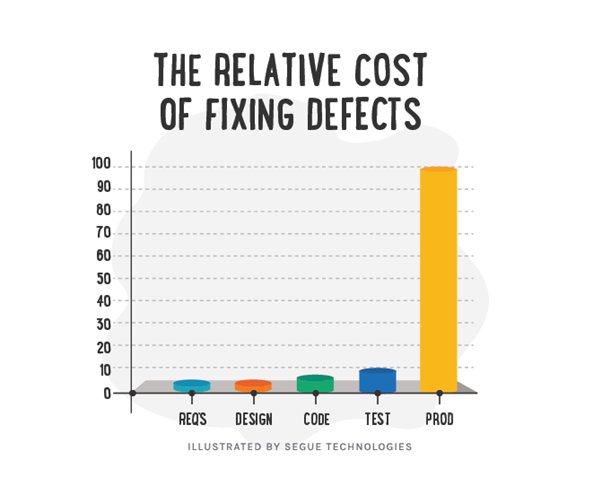
Image Source
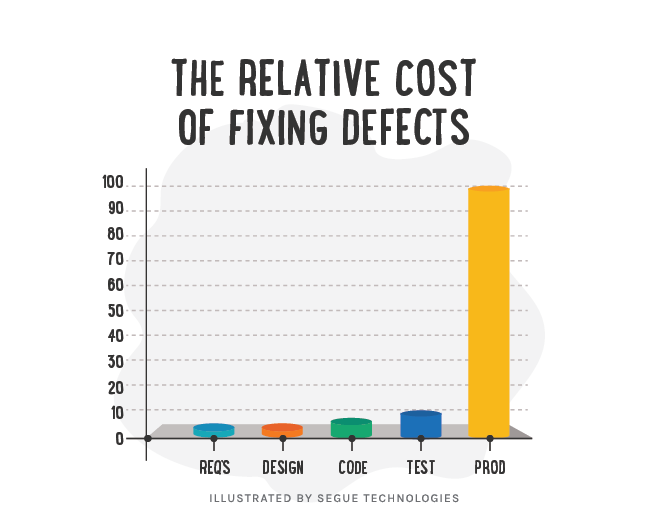
As seen so far, it is imperative for software teams to give equal weightage to development & testing else buggy features might result in a substandard end-user experience! The integral question is “Is software testing only limited to identifying bugs”? Well, bug detection is just one of the many things that is possible with software testing. ‘Software Testing Objectives’ is the main point of discussion in this blog.
By the end of this blog, you would be in a much better position to leverage software testing beyond just defect identification and tracking! So, let’s get started…
[Note: Product, Website, and Application are used interchangeably throughout the course of this blog]
What Is Software Testing?
Software Testing is the process of evaluating the software product for identifying bugs/issues in the product. Improving software quality is the core purpose of running software tests. A mix of manual and automated tests are normally conducted at every juncture of software development. This is to make sure that a fully-functional application is released to the end-users of the product.
In a traditional SDLC (Software Development LIfe Cycle), testing is normally conducted at the end of the software development phase but this is not the case with Agile testing. In an Agile environment, testers and developers work in close sync since the testing process is carried out in an iterative (or continuous) manner.
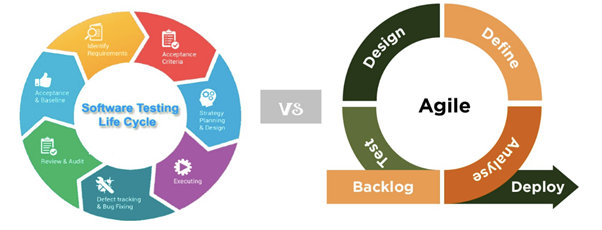
Agile vs. Software Testing Life Cycle

As seen in Agile testing, the tests are conducted whenever there are any changes in the development code. Owing to the continuous nature of testing, not even a single line of untested code gets into the repository! Also, the tests are conducted in shorter sprints/cycles which eventually results in reducing the developer feedback time. All of this results in improving the product quality whilst accelerating the speed at which development and testing is done! However, covering every aspect of Agile testing is beyond the scope of this blog.
Since software testing plays such an integral role in enhancing the application’s quality, it is essential to onboard an experienced QA testing company to reap the maximum benefits of testing.
Also Read: QA Testing Process From A-Z
Major Objectives Of Software Testing
Before we deep dive into the objectives, it is important to reiterate that testing must be performed from different angles like functional, non-functional, security, accessibility, and more. We would look into it in the latter section of this blog.
With the platform all set, let’s look at some of the major objectives of software testing:
Identification of Bugs
The first and foremost goal of software testing is to improve software quality by identifying bugs in the application. Irrespective of the size or complexity of the application, tests are conducted on a continuous basis to unearth issues and build a high-quality product.
Tests that require human intervention (or cannot be automated) are conducted using manual testing. On the other hand, test automation frameworks (or tools) are leveraged to run tests in a CI/CD pipeline. Such an approach minimizes the developer feedback loop and continually improves the software quality at every stage of application development.
Also Read: Guide To Write A Quality Bug Report
Improvement of software quality
As mentioned in the earlier point, the primary intent of running software tests is to locate potential bugs in the application. These bugs are then prioritized on a severity basis, post which they are assigned to the respective developers for fixation.
Example:
A simple bug in a Banking application could be an incorrect display of message string when the user successfully logs into the application. This can be considered a low severity issue. On the other hand, users unable to sign-up (or even login) to the Banking application can be considered a blocker (or a very high-severity issue). This is because ‘sign-up’ and ‘login’ are the very first steps that any user performs in the application.

Sample Error String

Irrespective of the severity of the issue(s), software testing plays an instrumental role in improving the quality of the application. Without QA (Quality Assurance) or testing, you cannot release the application in the market.
Enhancement of Security
As per reports, close to 422 million US consumers were impacted by data compromises in 2022. The compromises spanned across data leaks, data exposure, hacking attacks, and more.
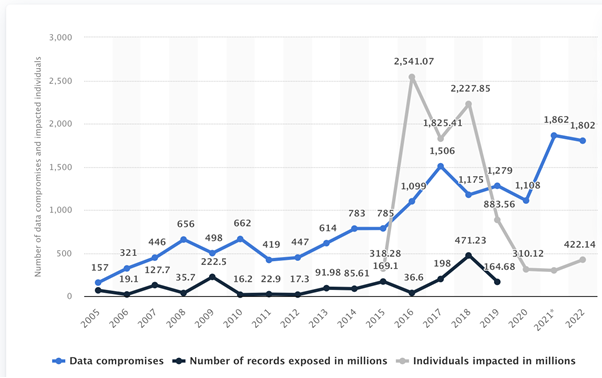
Annual number of data compromises and individuals impacted in the United States from 2005 to 2022
With an increase in the number of internet users, it becomes imperative to focus on the security aspects of the application. This is because security compromises (of any type/severity) will lead to loss in customer confidence and/or losses on the financial side.
Security tests like penetration tests, compliance tests, network security tests, etc. can be leveraged to unearth security vulnerabilities in the application. In many tests, internal testers don the hats of the hacker to identify security loopholes. Network security testing ensures that any form of data is always encrypted & secured, whether it is in motion or at rest!
Hence, security testing must be leveraged to validate different aspects of the application, especially from a security standpoint. As security testing is extremely important, it is wise to onboard an experienced QA testing services company that has an ample amount of expertise in security testing!

Enhancement of scalability and reliability
Many of us would have witnessed outages[2] when shopping on popular e-commerce platforms, particularly when there is significantly high traffic on the website!

Image Source

The main reason for such an experience could be unprecedented load on the website, causing hiccups to the end-users of the website (or application). This is where load testing can be valuable, as it helps in validating the application’s behavior when it is subjected to different kinds of load. Load testing falls in the category of performance testing, a non-functional type of testing that helps in improving the scalability, reliability, responsiveness, and speed aspects of the application.
Some of the major forms of performance testing are:
- Load testing
- Stress testing
- Volume testing
- Soak testing
- Endurance testing
A highly secure, reliable, and scalable application can have a long-lasting impact on the end-user experience. Performance testing helps in ensuring that your application is built for scale, thereby ensuring that there are no outages at times when there is a high load on the application!
Meeting Compliance Standards
Whether you are building a custom mobile application or a SaaS project or any other software product; it is essential to follow laws & principles related to software privacy, and more. For example, a ISO 9001 certification means that the respective product/service meets the customer requirements and regulatory standards.
The application must adhere to GDPR (General Data Protection Regulation) if your customers are located in the UK region. On similar lines, the application must adhere to CCPA (California Consumer Privacy Act) compliance if your target market is the US. Financial losses, brand damage, security breaches, etc. are some of the consequences[3] of non-compliance.
This is where software testing can play a key role in ensuring that the product/application adheres to the necessary regulatory requirements. Considering the criticality of security and compliance, it is important to have tests in place that not only help in building a fully-functional, but also compliant software product!

It’s A Wrap
Like software development, emphasis must also be laid on software testing so that a functional, secure, reliable, and scalable application is shipped to the target customers. You need to focus on different types of tests – unit, integration, performance, security, acceptance, compatibility, and exploratory testing.
A software testing company like KiwiQA can play a significant role in giving wings to software testing strategy so that your team can ship the desired application (or product) at a faster pace 
The post Objectives of Software Testing appeared first on KiwiQA.
]]>